
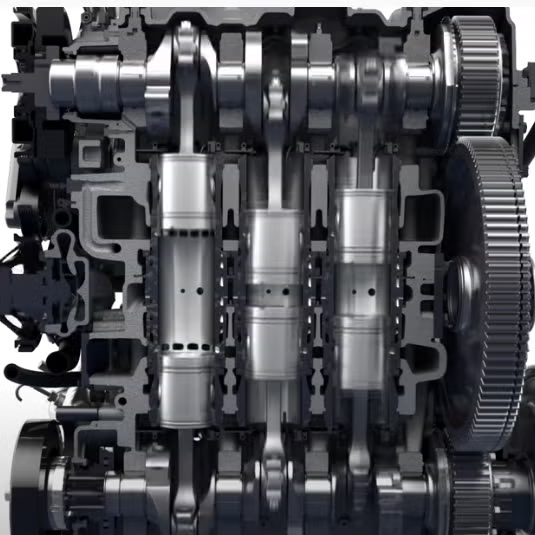
Confused about diesel engine configurations? Whether you’re a seasoned mechanic or a technical buyer, understanding the nuances between inline V-type and other lesser-known layouts can save hours in the shop and thousands on the job. This is your blueprint for selecting the right diesel engine.
According to the Australian Bureau of Statistics, over 42% of all registered vehicles in Australia are diesel-powered, with freight and heavy-duty trucks making up the majority. Choosing the right engine layout isn’t just smart—it’s essential to staying competitive and road-ready.
Inline vs V Type Engines: Which Configuration is Best?
The Engineering Behind Inline and V-Type Diesel Engines Explained
Inline (or straight) engines and V Type engines dominate the diesel landscape but for very different reasons.
Inline diesel engines position all cylinders in a single row. This configuration is loved for its simplicity, balance and ease of maintenance. It’s common in medium duty trucks and applications where space isn’t a critical concern. The long narrow shape provides good access for repairs and typically ensures fewer moving parts than its V-type counterpart.
Vtype diesel engines on the other hand position cylinders in two banks at an angle forming a “V.” This layout allows manufacturers to fit more cylinders in a compact engine bay. Think high horsepower compact form and brute force. They’re ideal for long haul heavy duty applications where performance trumps simplicity.
Each configuration carries tradeoffs. Inline engines are easier to rebuild and generally more cost effective. V Types bring better power to size ratios but often demand more skill to service due to tighter packaging.
Beyond Basics: Exploring Other Diesel Engine Configurations
Opposed-Piston Radial Boxer and More What You Didn’t Learn in Trade School
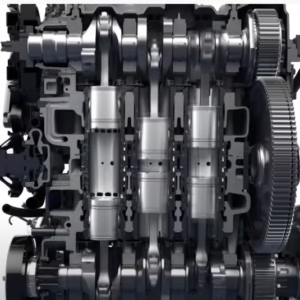
While most diesel mechanics deal with inline and V Type engines daily there’s a fascinating world beyond them.
Opposed-Piston Engines eliminate the need for cylinder heads by having two pistons share a single combustion chamber one from each side. The design is efficient, powerful and compact and is making a comeback in military and high performance industrial applications.
Boxer Engines (horizontally opposed) spread pistons flat across a horizontal plane. Though rare in diesel form they provide excellent balance and low vibration ideal for specific niche uses.
Radial Engines once the kings of the skies feature cylinders arranged in a circle around the crankshaft. Obsolete for most land based vehicles but an engineering marvel nonetheless.
Each of these configurations comes with unique challenges and advantages. Engineers exploring modern or custom diesel applications often revisit these concepts to squeeze out specific performance benefits.
Configuration vs Application: Choosing the Right Engine for the Job
How Engine Layout Affects Power Delivery, Size, Cooling and Maintenance
Not all engines are created equal and not all layouts fit every purpose. Inline engines excel in vehicles where length isn’t a constraint but ease of service matters. Their smooth operation and lower parts count make them ideal for operators focused on uptime and reduced maintenance complexity.
V Type engines are more suitable for heavy haulage and high power demands where compact size and brute torque are essential. However with greater performance comes more heat higher stress on internals and a tighter squeeze when it comes to repairs.
Opposed Piston engines thrive in applications where thermal efficiency and space saving design take priority while specialty layouts like boxer or radial are often driven by specific space vibration or historical constraints.
Technical Buyer’s Edge: What Every Mechanic Should Know Before Fitting or Replacing
Key Considerations When Selecting an Engine for Heavy Duty Work
When you’re spec’ing or replacing an engine don’t just look at brand or horsepower. Layout matters more than most people think.
Ask yourself:
- Will this engine fit my chassis without modifications?
- Is the cooling system adequate for the engine configuration?
- Can my team service it without delays or specialist tools?
- Will the configuration cause vibration or balance issues at scale?
For example an inline6 Cummins ISX might be perfect for a freight truck prioritising durability and lower maintenance costs. Meanwhile a V8 Detroit Diesel might suit a fleet needing higher torque in tight engine bays.
What People Often Ask Before Booking
What’s better for trucks inline or V Type diesel engines?
It depends. Inline engines are simpler and easier to maintain for reliability. V Type engines offer higher output in smaller packages better for high demand tight space applications.
Does AJK Engines supply both inline and V Type diesel engines?
Absolutely. From Cummins ISX inline6 to CAT C15 Vtype and everything in between, AJK Engines offers a full range of configurations.
Do certain layouts require special installation tools or skills?
Yes. Vtype and high performance engines may require more precision and technical knowhow. That’s why AJK’s drive in drive out service takes care of the hard parts for you.
Can I upgrade from an inline to a Vtype engine or vice versa?
In some cases yes but it may require modifications. Talk to AJK Engines first to evaluate compatibility and performance tradeoffs.
Why trust AJK Engines for complex diesel configurations?
Because we specialise in it. Our in house technicians 12 month unlimited kilometre warranty and expert fitting services make us the goto for Queensland’s toughest diesel jobs.
Get the Right Engine Layout Backed by Experts Who Know Diesel
When it comes to diesel engine configurations one size does not fit all. At AJK Engines we’ve built a business around helping you choose the right layout brand and spec for the right reasons. Whether you’re rebuilding a fleet or replacing a single engine you’ll get expertise, transparency and a 12 month unlimited kilometre warranty to back it up.
Call AJK Engines today on 07 5529 2289 or book your drive in drive out engine replacement online. Let’s get your truck working, not waiting.