
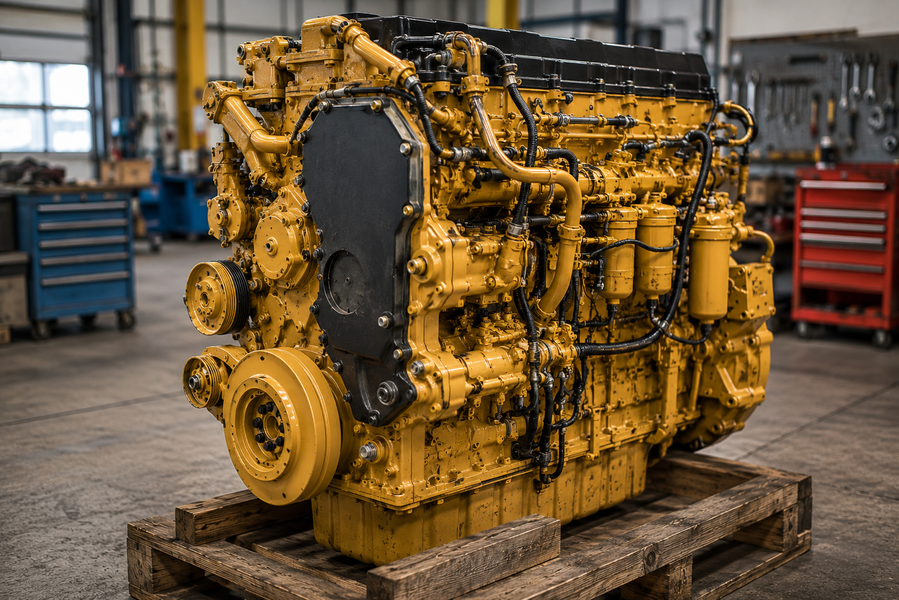
When buyers search for a CAT C15 ACERT for sale, they are usually past casual research. They know the engine platform. They know the replacement cost is serious. What they need now is a clear way to judge risk before approving a quote.
Price matters, but it should not be the only question. A CAT C15 ACERT exchange engine can look competitive until unclear inclusions, core charges, fitting issues, or warranty limits appear later.
At AJK Engines, we supply exchange engines for heavy-duty diesel applications, with in-house reconditioning and drive-in, drive-out installation support available. For commercial operators, the goal is simple: reduce downtime, avoid confusion, and make the replacement process easier to manage.
When a CAT C15 ACERT Looks Available, What Should You Check First?
Start by confirming whether you are looking at a genuine exchange engine package or a narrower supply-only offer.
Ask three questions straight away:
- Is the engine supplied on an exchange basis?
- What exactly is included in the package?
- Is fitting, aftercare and warranty support available?
These questions help separate a useful commercial solution from a basic sales listing.
A serious CAT C15 ACERT package should clearly explain what is supplied, what must be transferred, what warranty applies, and what happens with your old engine core.
Availability can also depend on stock, engine specification, application details and workshop capacity, so it is worth confirming these points early.
What Does “Exchange Engine” Mean?
An exchange engine deal means your old engine core forms part of the transaction. You receive a replacement engine package and return a suitable core into the exchange system.
This matters because the core can affect the final cost.
Before treating the advertised price as fixed, ask:
- How will my core be assessed?
- What makes a core unsuitable?
- What happens if the core is incomplete?
- Could damage, missing parts or modifications trigger extra charges?
The clearer the answer, the easier it is to compare one quote with another.
CAT C15 ACERT Exchange vs Rebuilding Your Existing Engine
Some buyers compare an exchange engine with rebuilding their current engine.
A rebuild may suit operators who have time, a known engine history and a trusted workshop. But it can also create uncertainty if extra damage is found once the engine is stripped.
An exchange engine can reduce waiting time because a replacement unit may already be prepared or closer to completion. That can be valuable when the truck needs to return to work quickly.
The right choice depends on:
- engine condition
- downtime tolerance
- workshop capacity
- parts availability
- budget certainty
- warranty requirements
For many commercial operators, exchange is attractive because it gives a clearer pathway from failure to replacement.
What Should Be Included in a Serious CAT C15 ACERT Package?
Do not rely on words like “rebuilt”, “premium” or “ready to go” without checking the detail.
Ask for a clear list of inclusions. Depending on the package, this may cover major internal components, cylinder head work, injectors, camshaft and rocker gear, Jake brakes, turbochargers, filters, transferred components, paint finish, fitting options and warranty terms.
The key point is not just what is included. It is whether the supplier states it plainly.
A good package description helps you understand:
- which major wear items have been addressed
- which parts are replaced, rebuilt, refurbished or transferred
- whether turbo-related components are included
- whether installation is available
- what the warranty actually covers
If important details are missing, ask before approving the quote.
Common Reasons a CAT C15 ACERT May Need Replacing
A CAT C15 ACERT may need major repair or replacement when faults move beyond minor maintenance.
Common warning signs can include:
- excessive blow-by
- coolant loss
- oil contamination
- low oil pressure
- bearing noise
- overheating
- loss of power
- repeated injector or turbo-related issues
- high repair costs compared with replacement value
Not every symptom means the engine needs replacing. But when downtime, labour, parts and repeat failures start stacking up, an exchange engine may become the more practical option.
How Do You Spot Rebuild Shortcuts?
A clean coat of paint does not prove a strong rebuild.
Ask process questions:
- Was the engine fully stripped and inspected?
- Were the block and crankshaft cleaned and checked?
- Was crack testing carried out where required?
- Were worn components replaced to suitable standards?
- Was machining completed where needed?
- Is the rebuild process completed in-house or outsourced?
A supplier with a disciplined process should be able to explain it clearly. If the answers stay vague, keep asking.
How Much Reassurance Does the Warranty Give You?
A warranty matters on a high-value exchange engine, but the detail matters as much as the headline.
AJK exchange engines are offered with a 12-month unlimited kilometre warranty, subject to the relevant terms and quoted scope.
Before you commit, ask:
- What parts are covered?
- Does labour cover depend on who installs the engine?
- What is excluded?
- How should a warranty issue be reported?
- Could modifications or aftermarket changes affect cover?
- Does the warranty apply from purchase or installation?
A clear warranty is better than a vague promise. Read the warranty terms before approving the job and make sure they match the quoted scope.
Should You Buy the Engine Only, or Have It Fitted as Well?
This depends on how much coordination risk you want to carry.
Supply-only may suit buyers with an internal maintenance team or a trusted workshop. But it can also split responsibility between the engine supplier and installer.
Having the same business supply and fit the engine can simplify the process. It can also make the accountability chain clearer if something needs checking after installation.
For commercial operators, that matters. A cleaner process can mean fewer delays, fewer disputes and a faster route back to work.
How Long Could a CAT C15 ACERT Replacement Take?
Lead times depend on availability, engine specification, workshop capacity, parts requirements and whether fitting is included.
That is why buyers should provide accurate details early, including:
- engine make and model
- truck make and model
- engine serial details where available
- service requirements
- current fault symptoms
- whether fitting is required
The more accurate the information, the easier it is to confirm availability, quote properly and plan downtime.
The Smartest Questions to Ask Before Requesting a Quote
Before asking for price, ask for clarity.
Use these questions:
- What exactly is included in the CAT C15 ACERT exchange package?
- What is transferred from my existing engine?
- How is my returned core assessed?
- What can trigger additional core charges?
- Is fitting available?
- What does the quoted fitting scope include?
- What does the 12-month unlimited kilometre warranty cover?
- Does labour cover depend on who installs the engine?
- What exclusions should I understand before the job starts?
- What information do you need from me to quote accurately?
These questions help turn a rough price into a useful buying decision.
Why Waiting Too Long Can Cost More Than the Engine Price
Delaying a decision can feel cautious, but it can increase risk.
If the truck is off the road, revenue stops while business costs continue. Delays can also create pressure, and rushed buyers often accept unclear terms they would normally question.
The scale of Australia’s road freight task shows why vehicle availability matters. The Australian Government’s Bureau of Infrastructure and Transport Research Economics reported that approximately 249 billion tonne-kilometres of freight were moved by road during 2023–24. For commercial operators, this reinforces the importance of planning engine replacement early and comparing availability, fitting scope and lead times before a failure becomes an urgent recovery job.
There is also the core issue. If the old engine deteriorates further, becomes incomplete, or is stripped before assessment, it may affect exchange value.
The better approach is to ask the right questions early, compare package scope properly, and make a clear decision before the job becomes a recovery exercise.
CAT C15 ACERT Buyer FAQs
Does exchange basis mean I have to supply my old engine?
Yes, in most exchange models the old core forms part of the transaction. Ask how the supplier assesses core condition before you commit.
What can trigger an extra core charge?
A missing, incomplete, heavily damaged, modified or unsuitable core may trigger additional charges. Confirm the assessment rules upfront.
Does a premium package automatically mean a better outcome?
Not automatically. The value depends on what is included, how the engine is rebuilt, and how clearly the supplier explains the package.
Is the 12-month unlimited kilometre warranty enough by itself?
It is a strong assurance, but you still need to read the terms. Check covered parts, exclusions, labour conditions, reporting process and installation requirements.
Is there an advantage in having the same business fit the engine?
Often, yes. It can reduce coordination risk and make responsibility clearer if a problem needs diagnosing later.
What should I have ready before requesting a quote?
Have your engine details, truck make and model, fault symptoms, service requirements and contact details ready.
Ready to Compare a CAT C15 ACERT Exchange Engine?
If you are comparing a CAT C15 ACERT for sale, do not start and finish with the sticker price.
Check the exchange terms. Check the core charge conditions. Check the package inclusions. Check the warranty. Check whether fitting support gives you a cleaner outcome.
That is when a quote becomes genuinely useful.
Contact AJK Engines to discuss CAT C15 ACERT exchange engine availability, fitting options, warranty terms and quote requirements.