
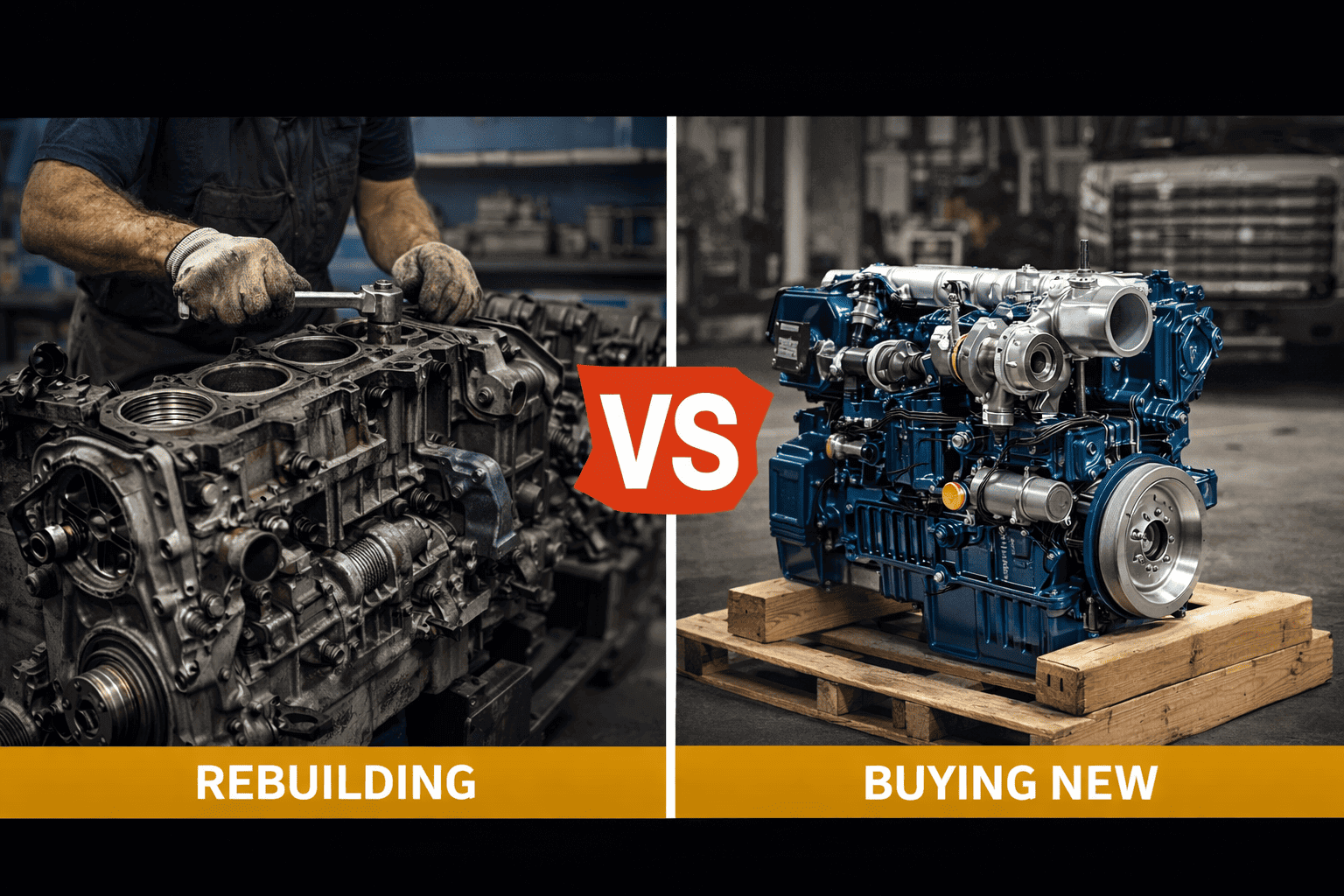
For organisations that rely on diesel-powered equipment, engine failure or declining performance presents a critical financial decision. Should the existing engine be rebuilt, or is it more practical to replace it entirely with a new unit? For finance teams and operations managers, this choice is not purely mechanical—it is a strategic financial evaluation.
Both options carry significant implications for operational costs, equipment downtime, long-term reliability, and asset value. Understanding diesel rebuild costs compared to the financial implications of a new engine investment helps organisations make decisions that support both operational continuity and responsible capital management.
This article explores the financial and operational factors that influence the decision between rebuilding a diesel engine and purchasing a new one, offering an analytical perspective for decision-makers managing fleet assets and heavy equipment.
Understanding the Diesel Engine Lifecycle
Diesel engines are designed to operate for extended periods under heavy workloads. Many commercial engines are capable of running hundreds of thousands of kilometres before requiring major repairs.
According to the Australian Bureau of Statistics Motor Vehicle Census, diesel-powered vehicles make up around 29% of all registered vehicles in Australia, highlighting how widely diesel engines are used across freight transport, agriculture, construction, and other heavy industries.
However, even well-maintained engines eventually experience wear in critical components such as pistons, bearings, fuel injectors, and cylinder liners. At this point, organisations must evaluate whether repairing the engine through a rebuild is financially viable or whether a new engine investment is the better long-term option.
The decision often begins with an evaluation of diesel rebuild costs, including labour, replacement components, and downtime expenses.
Finance teams must also consider how long a rebuilt engine is expected to perform before further maintenance becomes necessary.
What Is a Diesel Engine Rebuild?
A diesel engine rebuild involves dismantling the engine and restoring worn or damaged components. The process typically includes replacing or refurbishing internal components such as pistons, rings, bearings, and gaskets.
In many cases, the engine block, crankshaft, and other structural components remain intact, allowing technicians to restore engine performance without replacing the entire unit.
The primary advantage of rebuilding is cost efficiency. Compared to a new engine investment, rebuilding may require a smaller upfront expenditure.
However, evaluating diesel rebuild costs requires careful analysis of several factors, including labour intensity and component availability.

A rebuild may include:
- Replacement of worn internal components
- Cylinder head refurbishment
- Fuel system servicing
- Turbocharger inspection or replacement
- Engine testing after reassembly
For organisations with experienced technicians or access to specialised workshops, rebuilding can extend engine life while controlling expenses.
The Financial Structure of Diesel Rebuild Costs
From a financial perspective, diesel rebuild costs are typically lower than purchasing a completely new engine. However, the actual savings depend on the condition of the existing engine and the scope of repairs required.
Typical rebuild costs may include:
- Labour for engine removal and disassembly
- Replacement components and rebuild kits
- Machine shop services such as resurfacing
- Reinstallation and testing
For finance teams evaluating diesel rebuild costs, it is important to consider not only the direct expenses but also the opportunity cost of downtime.
If equipment remains out of service during the rebuild process, operational disruptions may reduce the financial advantage of rebuilding.
In some situations, the cumulative diesel rebuild costs approach the price of a new engine investment, particularly when multiple components require replacement.
What a New Engine Investment Involves
A new engine investment involves replacing the existing engine with a completely new unit supplied by the manufacturer or authorised distributor.
New engines offer several advantages, including improved reliability, updated technology, and full manufacturer warranty coverage.
From a financial standpoint, a new engine investment typically involves higher upfront capital expenditure compared to diesel rebuild costs.
However, the benefits of a new engine may include:
- Improved fuel efficiency
- Reduced maintenance requirements
- Longer service intervals
- Greater operational reliability
For organisations managing large fleets or critical equipment, a new engine investment may support long-term cost stability.
Finance teams often compare these long-term benefits against the immediate savings offered by rebuilding.
Reliability Considerations
Reliability is one of the most important operational factors when comparing diesel rebuild costs with a new engine investment.
A rebuilt engine may perform effectively if the rebuild process is thorough and high-quality components are used. However, some older components may remain in service, which can introduce potential risk.
A new engine investment, by contrast, replaces all components and eliminates the uncertainty associated with ageing engine parts.
Operations managers often evaluate reliability by considering:
- Equipment criticality
- Frequency of engine failure in the fleet
- Maintenance history
- Operational workload
When reliability is essential for maintaining production schedules or delivery commitments, organisations may prioritise a new engine investment over lower diesel rebuild costs.
Downtime and Operational Impact
Equipment downtime is another critical consideration in this financial decision.
Rebuilding an engine may require extensive workshop time, particularly if machine work or component sourcing is involved. During this period, the equipment remains unavailable for operational use.
A new engine investment can sometimes reduce downtime if replacement engines are readily available.
For logistics fleets, construction companies, and industrial operations, downtime often translates directly into lost revenue.
Finance teams therefore evaluate the impact of downtime when comparing diesel rebuild costs with the broader implications of a new engine investment.
Fuel Efficiency and Modern Technology
Technological advancements in diesel engine design have improved fuel efficiency and emissions performance.
New engines often incorporate advanced fuel injection systems, improved turbocharging technologies, and electronic control systems designed to optimise combustion.
When evaluating a new engine investment, organisations should consider the potential fuel savings offered by modern technology.
In some cases, improved fuel efficiency can offset the higher initial cost of a new engine investment over time.
While diesel rebuild costs may appear lower initially, rebuilt engines may not benefit from the same technological improvements found in new engine platforms.
Environmental and Regulatory Considerations
Environmental regulations continue to evolve across the transport and industrial sectors.
New engines are often designed to comply with current emissions standards, incorporating advanced exhaust treatment systems and cleaner combustion technology.
A new engine investment may therefore support regulatory compliance and reduce environmental impact.
Older engines undergoing rebuilds may not meet modern emissions standards, even after refurbishment.
For organisations operating in regulated industries, this factor can influence the decision between diesel rebuild costs and investing in a new engine.
Long-Term Financial Planning
For finance teams managing fleet assets, the choice between rebuilding and replacement must align with long-term capital planning.
A rebuild may provide short-term cost relief but could require additional maintenance sooner than a new engine.
A new engine investment involves greater upfront expenditure but may deliver more predictable long-term operating costs.
Financial analysis often includes:
- Projected maintenance costs
- Fuel consumption forecasts
- Expected service life
- Equipment resale value
Comparing these factors allows organisations to evaluate whether diesel rebuild costs or a new engine investment better supports long-term financial goals.
Asset Value and Equipment Lifespan
The age of the equipment also plays an important role in this decision.
If the machinery itself is approaching the end of its operational lifespan, rebuilding the engine may be the more practical option.
In contrast, newer equipment may justify a new engine investment, particularly if the machinery is expected to remain in service for many years.
Operations managers often evaluate how engine decisions affect overall asset value.
Lower diesel rebuild costs may support short-term operational continuity, while a new engine investment may enhance the long-term value of the equipment.
Risk Management in Engine Decisions
Every mechanical decision carries a degree of operational risk, especially when dealing with high-value diesel equipment that supports daily business operations. Engines are central to productivity, and any miscalculation in repair or replacement decisions can affect uptime, budgets, and operational continuity. This is why risk management plays a critical role when comparing diesel rebuild costs with the option of a new engine investment.
Rebuilding an engine requires a detailed evaluation of existing components. Technicians must assess the condition of the block, crankshaft, pistons, and fuel system to determine whether the engine can perform reliably after refurbishment. Even with a thorough rebuild, some original components may remain in use, which means there is always some uncertainty regarding how long those parts will continue to function under operational stress.
In contrast, a new engine investment significantly reduces mechanical uncertainty. A new engine comes with unused components, manufacturer specifications, and often warranty coverage. These factors provide greater predictability in performance and maintenance scheduling. However, the financial exposure is higher because the upfront cost of a new engine investment is typically much greater than diesel rebuild costs.
Effective risk management involves examining both technical and financial factors before making a decision. Organisations often rely on several strategies to guide this process:
- Engineering assessments of engine condition, including compression testing, oil analysis, and inspection of critical internal components.
- Maintenance history analysis, reviewing past repairs and service intervals to determine how consistently the engine has performed over time.
- Operational workload projections, estimating future engine demand based on vehicle utilisation, load requirements, and operating environments.
By carefully weighing diesel rebuild costs against the reliability and predictability of a new engine investment, organisations can manage both financial and operational risk. This balanced approach allows finance teams and operations leaders to protect productivity while ensuring capital resources are used wisely.
Professional Guidance to Ensure Right Decision
Choosing between rebuilding a diesel engine and purchasing a new one requires careful financial and operational analysis. While diesel rebuild costs often involve lower upfront expenditure, organisations must also consider reliability, downtime, and long-term maintenance requirements. A new engine investment may require greater initial capital but can offer improved efficiency, reliability, and modern technology that supports long-term operational performance.
For businesses assessing diesel rebuild costs or considering a new engine investment, professional guidance can help ensure the right decision is made. AJK Engines works with companies across South East Queensland to evaluate engine condition, recommend practical repair or replacement solutions, and support long-term equipment reliability.
Contact AJK Engines today to discuss your diesel engine rebuild or replacement options and find the most suitable solution for your equipment.