
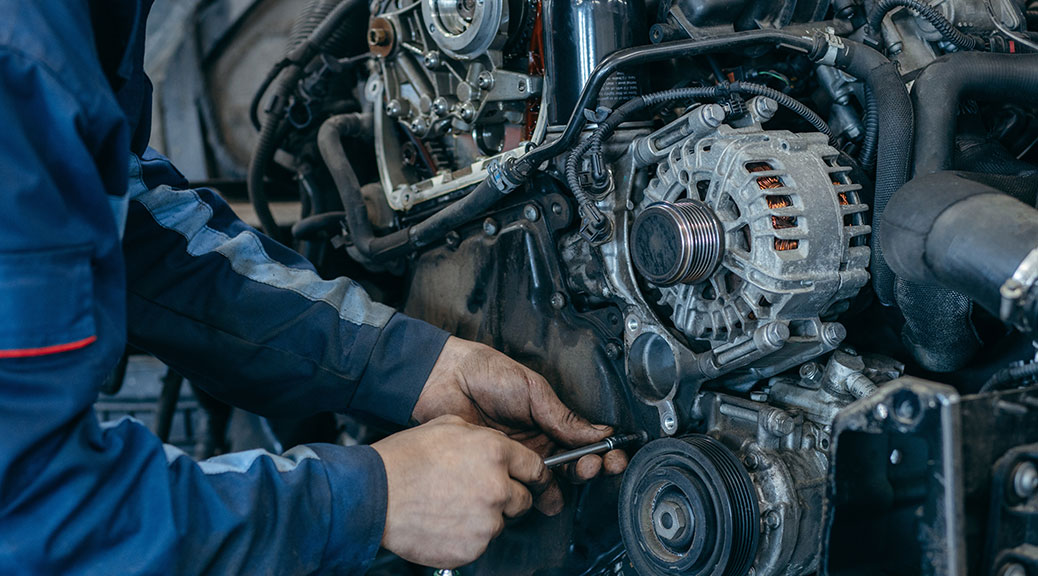
A truck with a failed engine creates an immediate operational problem.
The repair bill matters, but for a fleet owner, transport operator or workshop manager, the bigger calculation often involves how long the truck will be unavailable.
Loads still need moving. Drivers need productive vehicles. Workshop schedules change. Another truck may have to cover the work, assuming spare capacity exists.
That is why the engine rebuild vs replace decision should start with the operational requirements around the truck, then work back to the most suitable engine strategy.
At AJK Engines, we supply new, remanufactured and reconditioned engines on an exchange basis. We can also rebuild or recondition an existing engine and provide drive in drive out engine fitting from our Biggera Waters workshop.
These options provide different pathways towards the same objective: reducing unnecessary truck downtime and returning the vehicle to productive service.
Start With Downtime, Then Choose the Engine Strategy
Engine repairs can become expensive before anyone has picked up a spanner.
A truck sitting in a yard is unavailable for freight, construction work, waste operations, deliveries or whatever job normally produces revenue for the business. The operational effect varies between businesses, so there is no credible universal dollar figure for downtime.
The scale of Australia’s road freight task helps put that operational role into context. According to the Australian Government’s Bureau of Infrastructure and Transport Research Economics, road transport accounted for approximately 253 billion tonne-kilometres of domestic freight in 2024–25.
Every additional day the truck is unavailable can create another layer of cost or inconvenience.
A rebuild that appears attractive from the repair estimate may require time for teardown, inspection, machining, parts sourcing, assembly and testing. An exchange engine may provide a shorter pathway in some situations because the replacement unit has already been prepared.
Availability can change the equation.
If the correct exchange engine is not available, rebuilding the existing engine may become the more practical route. The extent of the failure, condition of the core, associated component requirements and planned future use of the truck can also affect the decision.
Turnaround matters, but the finished repair still needs to be suitable for the vehicle.
Exchange Engine or Rebuild? Understand What You Are Comparing
The term exchange engine describes a commercial arrangement as much as it describes the engine itself.
We supply a replacement engine and receive the customer’s existing engine as the corresponding exchange core, subject to the applicable exchange conditions. The replacement may be new, remanufactured or reconditioned depending on the package and application.
With a conventional rebuild, the engine already fitted to the truck must move through the required rebuilding process before it can return to the vehicle.
That process can involve disassembly, inspection, cleaning, testing, machining where required, component replacement, assembly and preparation for refitting.
An exchange arrangement separates the replacement engine from the rebuild timeline of the engine being removed. That can be important when an operator is trying to minimise the time a truck spends off the road.
| Factor | Exchange Engine | Rebuild Existing Engine |
| Engine pathway | Replacement engine supplied against an exchange core | Existing engine rebuilt or reconditioned |
| Timing | May remove part of the wait associated with rebuilding the removed engine if a suitable unit is available | Existing engine must move through assessment and the required rebuilding process |
| Availability | Depends on a suitable exchange engine being available | Depends on engine condition, parts and required rebuild work |
| Core arrangement | Existing engine generally becomes the exchange core under the applicable conditions | Existing engine remains the unit being repaired |
| Practical fit | Can suit situations where availability and turnaround favour exchange | Can suit situations where retaining and rebuilding the existing engine is more practical |
Instead of asking only, “Which engine is cheaper?”, the more useful question is, “Which pathway gives this truck the right outcome within the timeframe the business needs?”
When an Exchange Engine Makes Sense
An exchange engine becomes particularly relevant when a truck needs to return to work quickly and a suitable replacement unit is available.
A prepared engine can remove part of the waiting period associated with rebuilding the customer’s own engine from the beginning.
The failed engine still has to come out. Installation work still needs to be completed. Associated systems and components still require appropriate attention. The job still has to be done correctly.
The difference is that a suitable replacement can already be ready for the next stage while the removed engine becomes the exchange core.
For an operator managing an immobilised truck, that can make the repair pathway easier to plan.
A Prepared Engine Can Reduce Part of the Wait
Consider two trucks with similar engine failures.
The first operator chooses to rebuild the engine already fitted to the vehicle. That engine has to be removed, stripped and assessed before the full rebuild scope becomes clear.
The second operator has access to an appropriate prepared exchange engine. The replacement pathway can progress without waiting for that particular failed engine to complete the full rebuilding cycle.
The exact turnaround still depends on the vehicle, engine, workshop requirements, parts and any additional problems identified during the job.
Even so, the difference in workflow can be significant when downtime is a major concern.
Exchange Engines Can Simplify a Multi-Stage Repair
Heavy engine work can involve several moving parts.
There is the engine itself. There is removal and fitment. Cooling-system components, hoses, mounts, ancillary equipment or other items may require inspection. Core arrangements need to be understood, and workshop timing has to align with engine availability.
Splitting those responsibilities between several suppliers can add another layer of coordination.
Our approach allows customers to discuss the engine, exchange arrangement and fitting requirements with us as part of the same job.
If your truck is currently off the road, you can contact AJK Engines with the truck make and model, engine make and model and details of the problem so we can discuss the available pathways.
Rebuilding Your Existing Engine Can Still Be the Smarter Route
Exchange engines solve a particular operational problem. They are not automatically the right answer for every truck.
Our rebuild and reconditioning capability provides another option.
If we do not have the required engine available as an exchange unit, we can assess rebuilding or reconditioning the customer’s existing engine. The condition of the engine and the nature of the failure will influence what is practical.
This route can also make sense where retaining the existing engine suits the vehicle, application or repair circumstances.
The important point is that the decision can account for both pathways.
Rather than starting from the assumption that replacement or rebuilding is always best, the discussion can centre on the truck, engine condition, availability and operator requirements.
Engine Supply and Fitting Can Be One Job
Finding an engine is only part of getting a truck moving again.
Someone still has to remove the existing engine, prepare the vehicle, install the replacement and complete the related workshop work required for the job.
Our drive in drive out engine fitting service brings those stages together.
Customers can bring the truck to our Biggera Waters workshop, where we can manage removal of the existing engine and installation of the replacement power plant.
This reduces the need to buy an engine from one supplier and then organise another workshop to fit it.
One Workshop Has Better Visibility Over the Repower
Engine replacement work can reveal issues that were difficult to assess while everything was still installed.
Connecting engine supply and fitting gives our workshop visibility across more of the agreed job and creates a clearer line of communication for the operator.
Instead of dealing with an engine supplier for one part of the process and a separate fitter for another, the customer can deal with us for the agreed scope.
For fleet managers and workshop managers, that can reduce administrative friction while the mechanical work is progressing.
Downtime management is not only about engine availability. It also involves avoiding unnecessary gaps between diagnosis, sourcing, removal, installation and preparing the truck to return to service.
Compare Repair Cost With the Cost of Downtime
Purchase price naturally attracts attention.
Heavy-duty engine work is a substantial decision, and operators need to understand what they are paying for. But price alone gives an incomplete comparison.
A useful engine rebuild vs replace assessment should consider the complete repair pathway.
An exchange option may involve the replacement engine, applicable core arrangements, fitting and other work identified for the vehicle. A rebuild may involve inspection, machining, replacement components, assembly, labour and the time required to complete each stage.
The scope varies from one engine failure to another.
A lower initial figure can lose some of its appeal if the truck remains unavailable substantially longer or the operator has to coordinate several separate stages.
Equally, choosing an exchange solution purely for speed makes little sense if rebuilding the existing engine better suits the situation.
The commercial decision sits at the intersection of cost, time, availability and the future role of the truck.
Five Questions We Use to Narrow Down Exchange Versus Rebuild
A productive conversation usually starts with a small amount of specific information.
1. What engine is fitted to the truck?
Engine make and model immediately narrow the available exchange and rebuild options. More detailed identification information may be required as the job progresses.
2. What happened to the engine?
A known failure, unusual noise, oil-pressure problem, overheating event or major internal damage can point the discussion in different directions.
Proper diagnosis is still important because symptoms alone do not always reveal the complete scope.
3. Is a suitable exchange engine available?
Availability can materially affect turnaround.
A prepared exchange engine creates one pathway. If a matching unit is unavailable, rebuilding or reconditioning the existing engine can become more relevant.
4. How quickly does the truck need to return to service?
A working truck in a time-sensitive fleet creates a different commercial problem from a vehicle that can remain off the road without disrupting operations.
5. Does the customer need engine supply or a complete fitted solution?
Some customers may need an engine package. Others want us to manage the engine and installation through our drive-in drive-out service.
Those answers give us a stronger basis for discussing the available options.
More Than One Route Back to Work
Heavy vehicle engine failures rarely arrive at convenient times.
A suitable exchange engine may reduce part of the waiting period where the correct unit is available. Rebuilding the existing engine can make more sense where an exchange option is unavailable or the engine condition and repair circumstances favour retaining the existing unit.
Our drive in drive out engine fitting service can also connect engine supply with removal and installation, reducing the need to coordinate separate suppliers for those stages of the repair.
The right pathway depends on the engine, the failure, availability, turnaround requirements and how the truck will be used after the repair.
Questions Operators Ask Before Choosing an Engine Pathway
Is an exchange engine always faster than rebuilding my existing engine?
No single turnaround applies to every engine job.
A suitable exchange engine can shorten the process because the replacement unit does not have to wait for your existing engine to complete its entire rebuild cycle.
Actual timing still depends on engine availability, vehicle requirements, fitting work and anything else identified during the job.
How do I know whether I should rebuild my engine or use an exchange unit?
We look at the engine failure, condition of the existing unit, availability of an appropriate exchange engine, required turnaround and how the truck will be used after the repair.
Those factors provide a better basis for the decision than choosing from price alone.
What happens to my old engine with an exchange engine?
Your existing engine normally becomes the exchange core under the applicable exchange arrangement.
Core requirements and condition should be confirmed as part of the quotation so everyone understands the commercial arrangement before work proceeds.
Can AJK Engines remove my old engine and fit the replacement?
Yes. We provide drive-in drive-out engine fitting from our Biggera Waters workshop, including removal of the existing engine and installation of the replacement power plant within the agreed scope of work.
What happens if you do not have my engine available on exchange?
We can discuss rebuilding or reconditioning your existing engine where an appropriate exchange unit is unavailable.
The engine first needs to be assessed so the required work and suitability of that pathway can be understood.
Should I choose the cheapest engine option?
The engine price should be assessed alongside the complete scope, expected turnaround, fitting requirements, core conditions and effect of downtime on your operation.
The most suitable commercial choice depends on the truck and the business using it.
What information should I provide before asking for a quote?
Start with the truck make and model, engine make and model and a description of the problem or required service.
Additional engine identification or technical information may be requested once we understand the job.
Reduce the Steps Between Engine Failure and Getting Back on the Road
A failed heavy-duty engine creates enough disruption without adding unnecessary repair coordination.
Our exchange engine program, rebuild and reconditioning capability, and drive-in drive-out fitting service provide several ways to approach the problem from the same workshop.
The right route depends on the engine, availability, damage, turnaround requirements and the operator’s plans for the vehicle.
For engine supply, exchange options, rebuilding or complete fitting, contact AJK Engines with your truck and engine details so we can discuss the next step.