

Why Power Isn’t Just About Displacement Anymore
The science behind turbochargers and their role in diesel engine performance
For decades, engine power was largely a function of engine size. Bigger displacement meant more torque, more hauling capacity, and more grunt on the job site. But with advances in engineering and tighter emissions standards, brute force alone doesn’t cut it anymore. Enter the turbocharger, a game-changing innovation that redefined what diesel engines could do.
In simple terms, a turbocharger is an air pump driven by the engine’s exhaust gases. It compresses incoming air before it enters the combustion chamber, increasing the amount of oxygen available. This allows the engine to burn more fuel, produce more power, and do it all from a smaller displacement.
In naturally aspirated engines, the amount of air entering the cylinders is limited by atmospheric pressure. But a turbocharged engine forces in more air under pressure, effectively cramming more oxygen into the same space. This leads to more complete combustion, higher torque output, and superior performance across the RPM range.
For diesel applications, especially in commercial transport, heavy equipment, and long-haul trucks, the benefits of turbocharging are clear. More pulling power, better throttle response, and improved torque at low revs all contribute to better productivity on the road or job site.
But the value of turbocharging isn’t just about peak horsepower. It’s about how that power is delivered. And that’s where the efficiency story begins.
How Turbochargers Drive Diesel Engine Efficiency
Boosting combustion, reducing fuel consumption, and cutting emissions
At AJK Engines, we often say that turbocharging is not just about more power. It’s about smarter power. In a world where fuel costs are climbing and emissions regulations are tightening, engine efficiency is king. Turbochargers play a crucial role in achieving that balance between performance and economy.
First, turbochargers improve combustion efficiency. By compressing the intake air, a turbo allows the engine to maintain an optimal air-fuel ratio under load. This means cleaner burning, more complete fuel usage, and less waste. In diesel engines, where fuel density and injection pressures are already high, a turbo can drastically reduce unburned hydrocarbons and particulates.
Second, turbochargers help reduce fuel consumption. Because they improve volumetric efficiency, they allow smaller engines to do the work of larger ones. A 13-litre turbocharged engine can outperform a naturally aspirated 15-litre engine under many conditions while using less fuel in the process. Over the lifespan of a vehicle, the savings are substantial.
Third, turbocharging enables lower emissions. Better combustion produces fewer harmful byproducts in the exhaust. Modern turbo-diesels also work in conjunction with EGR and SCR systems, with increased exhaust flow helping drive aftertreatment systems more effectively.
Australia’s ADR 80/04 standard requires all new heavy vehicles supplied from 1 November 2025 to meet Euro 6 emission limits, reinforcing the need for advanced turbocharged and after-treatment technologies that reduce NOx, PM and other pollutants.
Finally, turbochargers increase operational flexibility. By managing airflow, turbocharged engines perform well across a broader RPM range. Drivers get better throttle response under load or when climbing grades, making a tangible difference in real-world applications.
Fixed vs Variable Geometry Turbochargers
A deep dive into turbocharger types and their application in modern diesel systems
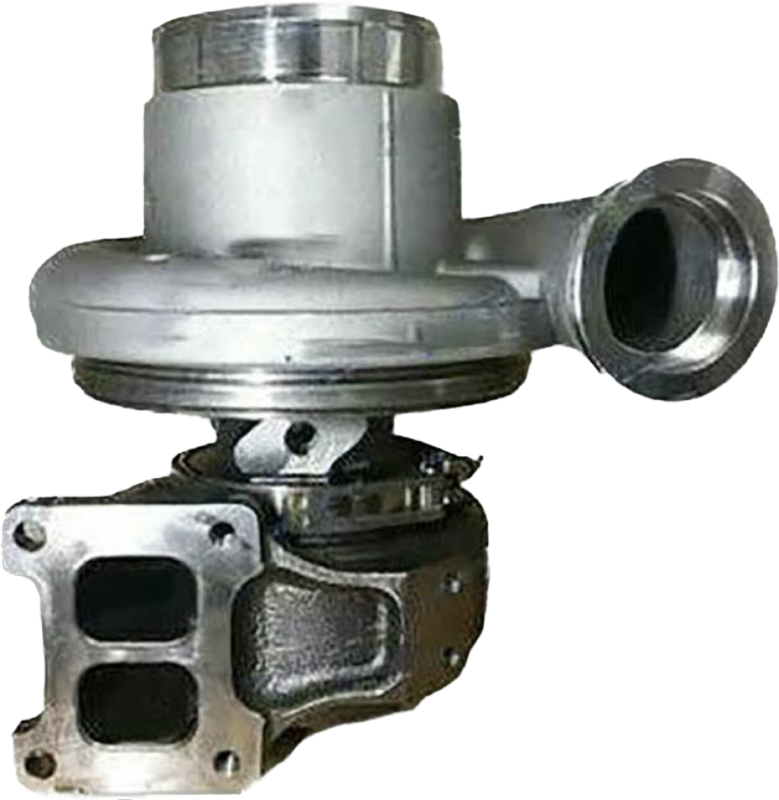
Not all turbochargers are created equal. The two most common types in diesel applications are fixed geometry and variable geometry turbochargers. Understanding the difference helps technicians and fleet operators make smarter decisions.
Fixed geometry turbos use a set turbine housing and fixed vanes. They are rugged, cost-effective, and perform well at higher RPMs, but they can suffer from turbo lag at low engine speeds due to limited exhaust flow.
Variable geometry turbochargers address this issue using adjustable vanes around the turbine wheel. At low RPMs, the vanes close to increase exhaust velocity and reduce lag. At higher RPMs, the vanes open to prevent backpressure. This results in smoother torque delivery and a wider usable power band.
These systems are common in modern platforms like the Cummins ISX and Detroit DD15, where electronic control systems precisely manage vane position. While more complex and maintenance-sensitive, they offer superior drivability and efficiency when properly maintained.
At AJK Engines, both systems are supported. Premium and Baseline PLUS builds often include variable geometry turbos where factory-equipped, while fixed geometry setups remain available for operators prioritising simplicity and durability.
What This Means for Engine Rebuilds and Replacement
Why turbocharger integration is critical for reconditioned engine reliability
Turbochargers are integral to modern diesel engines. Rebuilding or replacing an engine without considering turbo condition, compatibility, and calibration can lead to poor performance or premature failure.
Turbochargers must be correctly matched to the engine’s airflow and fueling strategy. Incorrect sizing or mismatched units can cause overboost, excessive exhaust temperatures, or weak performance. AJK Engines assembles and calibrates complete turbo-integrated packages to OEM specifications.
Oil supply is equally critical. Turbos rely on clean, pressurised oil. During reconditioning, AJK inspects oil galleries, replaces feed lines where required, and provides fitment guidance to prevent oil starvation.
Actuator systems must also be tested, particularly in variable geometry setups. Sticking vanes or failed actuators can cause boost loss or engine derate. Premium builds include full actuator testing and calibration.
Where turbo or airflow changes are made, ECU recalibration may be required. AJK Engines provides guidance or referral to trusted programming partners to ensure everything works as intended.
Common Questions About Turbocharged Diesel Engines
Can I reuse my existing turbo with a reconditioned engine?
Yes, if it passes inspection for wear, shaft play, oil leaks, and balance.
What’s the risk of turbo lag in older engines?
Older fixed-geometry setups may experience lag. Modern builds often address this with improved turbo design.
Are engines tested with the turbo installed?
Yes. Exchange engines are bench tested with turbos fitted where applicable.
How long does a turbo last?
With proper maintenance, 300,000 to 500,000 kilometres or more.
Do you sell turbos separately?
Yes. New and reconditioned turbochargers are available for major diesel platforms.
Take the Next Step Toward Power and Performance
If you’re serious about diesel performance, turbocharger function is fundamental. Whether upgrading a fleet, replacing an engine, or planning a rebuild, understanding turbo integration is key.
AJK Engines builds turbo-integrated diesel engines designed for reliability, efficiency, and real-world performance. Call 07 5529 2289 or enquire online to upgrade, replace, or recondition your diesel engine with confidence.