
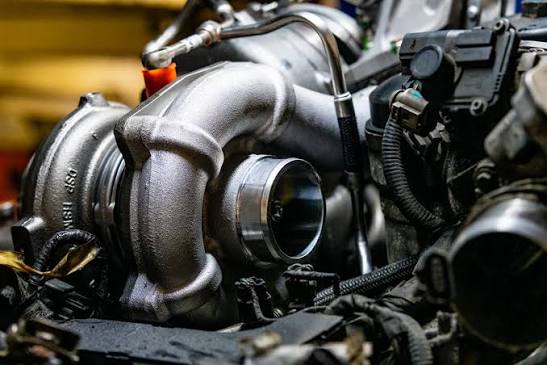
A Cummins ISX that suddenly feels flat under load can quickly make you suspect the turbo. The same applies if you notice black smoke, unusual turbo noise, rising fuel use or boost that no longer arrives as expected.
Those symptoms deserve investigation, but they do not identify the failed component on their own.
Cummins Turbo Technologies lists loss of power, excess smoke, high fuel consumption, overheating, elevated exhaust temperatures and turbo oil leakage among symptoms associated with turbocharger malfunction. Its troubleshooting guidance also warns that faults elsewhere in the engine can produce similar symptoms.
That distinction matters before you order parts.
If an ISX comes to us with a suspected turbo problem, the first step is understanding what the truck is doing, when the problem appears and which systems could cause the same behaviour. The goal is to isolate the fault before an operator spends money on a replacement that may not solve the problem.
Common ISX Turbo Failure Symptoms
Loss of power is one of the most common reasons an operator starts suspecting the ISX turbo.
The truck may run reasonably well unloaded, then feel noticeably weaker once it is asked to pull. Acceleration may slow, hill performance can deteriorate and the engine may stop producing the torque the driver normally expects.
Cummins’ Holset troubleshooting material includes an engine lacking power, poor transient response and smoke among symptoms associated with turbocharger problems. The same guidance links these complaints to several possible causes across the intake, exhaust, fuel and engine systems.
A turbocharger operates as part of a wider air-handling system. Its performance depends on exhaust energy reaching the turbine, the compressor moving air effectively, the charge-air path remaining sealed and the engine being able to use that air correctly.
A complaint that “the turbo isn’t boosting” is therefore a useful starting point for diagnosis, but not a diagnosis by itself.
Boost Loss or Slow Boost Response
A variable geometry turbocharger manages exhaust flow through the turbine so boost response can be controlled across the engine’s operating range. Cummins describes its VGT system as varying the exhaust passage area ahead of the turbine wheel, while its ISX information describes electric actuation being used to control boost response.
A driver may notice a problem as slower boost response, weak pulling power or a truck that struggles to produce the performance it previously had.
A damaged turbocharger is one possibility. Cummins’ troubleshooting material also identifies restricted compressor intake ducting, air leaks between the compressor and intake manifold, intake restrictions, exhaust restrictions and exhaust leaks as possible causes of weak performance.
The intake, charge-air and exhaust paths therefore need to be considered together.
Smoke Changes That Can Point Towards a Turbo Problem
Smoke can provide useful evidence because changes in airflow, fuel delivery, combustion or oil control can affect what appears at the exhaust.
Black smoke often attracts attention during a low-boost complaint because inadequate air delivery can affect combustion under load. Blue smoke may move the investigation towards oil consumption or oil entering the combustion or exhaust path.
Neither colour proves that the turbo has failed.
Cummins Turbo Technologies includes black and blue exhaust smoke in its turbocharger troubleshooting matrix and links excess smoke to possibilities including restricted air intake, air leaks, fuel or injector settings, valve timing, engine damage and turbocharger damage.
Smoke becomes more useful when assessed alongside boost behaviour, engine load, oil consumption, noise, fault information and the condition of surrounding systems.
Poor Fuel Economy and Weak Pulling Power
A truck does not need to suffer a dramatic turbo failure before an owner-driver notices that something has changed.
Fuel use may creep upwards. The driver may need more throttle for the same work. Acceleration can feel lazy. The truck may spend longer in lower gears or feel less comfortable carrying loads it previously handled.
High fuel consumption appears in Cummins Turbo Technologies’ troubleshooting matrix alongside several turbo-related complaints. The same material shows why diagnosis needs to extend beyond the turbo, as restrictions, leaks and engine faults can influence the same symptoms.
For a commercial operator, small performance changes can become expensive before a component completely fails.
Fuel economy by itself rarely identifies the cause. When it appears with low boost, smoke, unusual noise or increased oil consumption, it gives the technician a more useful diagnostic pattern.
Quick Symptom Guide
| What the driver notices | What it may suggest | Why further diagnosis matters |
| Weak pulling power or slow boost | Turbocharger problem, air restriction, charge-air leak, exhaust restriction or another engine fault | Several systems can reduce boost or engine response |
| Black smoke | Reduced airflow, air leak, fuel-related issue, engine fault or turbocharger problem | Smoke colour alone does not identify the failed component |
| Blue smoke or increased oil use | Oil-control issue, turbo-related problem, lubrication issue or engine wear | The source of the oil needs to be established before parts are replaced |
| Unusual turbo noise | Air leak, exhaust leak, restriction or physical turbo damage | A whistle or changed sound does not automatically mean the rotating assembly has failed |
| Rising fuel use | Reduced efficiency caused by airflow, boost, engine or turbo-related problems | Fuel consumption is more useful when assessed with other symptoms |
This table provides a quick diagnostic overview. It is not a substitute for inspection or testing.
Before Replacing an ISX Turbo, Check What Can Mimic Failure
One of the quickest ways to spend money twice is to diagnose the part from the symptom.
Cummins’ Holset troubleshooting guidance warns against automatically attributing turbo-related symptoms to the turbocharger because faults in other components can produce the same behaviour.
The importance of broader heavy-vehicle inspection is also reflected in Australian data. The National Heavy Vehicle Regulator inspected 9,082 vehicles and combinations during its 2024 National Roadworthiness Survey, with engine, driveline and exhaust faults ranking among the five most common areas of non-conformity identified nationally.
For an ISX operator, several areas deserve attention before the turbo is condemned.
Charge-Air and Boost Leaks
The compressor can produce pressure while the engine receives less air than expected if that pressure escapes between the turbo and intake manifold.
Cummins lists air leakage from the compressor to the intake manifold as a potential cause across several turbocharger symptom categories. Its guidance points towards seals, gaskets and fastening points as areas requiring attention.
In practical terms, a boost leak can feel surprisingly similar to weak turbo performance. The engine may feel flat, smoke can increase and boost behaviour can change, even though the root cause is in the charge-air path rather than the turbocharger itself.
This is why the system should be assessed before a replacement turbo is ordered.
VGT Control and Actuation Problems
Many Cummins ISX applications use variable geometry turbocharger technology.
A VGT changes the effective exhaust passage area feeding the turbine, allowing the system to alter turbo response according to engine operating conditions. Cummins also identifies the turbo actuator as the component controlling the variable geometry mechanism inside the turbocharger.
A boost-response complaint may therefore involve the turbo’s mechanical condition, the variable geometry mechanism, its actuator or the system controlling it.
Cummins’ warranty guidance for variable geometry turbos and electronic actuators requires diagnosis to be performed on-engine using the published troubleshooting procedures before warranty replacement.
Exhaust Restrictions and Engine-Side Problems
A turbo relies on exhaust energy to drive the turbine, so problems upstream or downstream can change the way it performs.
Cummins’ troubleshooting matrix includes restricted exhaust systems, cracked exhaust manifolds, failed or missing gaskets, gas leakage around the turbine inlet and other exhaust-side faults among the causes that should be considered during diagnosis.
The same guidance also includes injector settings, valve timing, worn piston rings or liners and damaged valves or pistons.
If poor combustion, restricted flow or internal engine wear is affecting turbo performance, replacing the turbo alone may leave the original symptom unresolved.
Physical Checks Can Reveal More Than a Warning Light
Electronic fault information can be valuable, particularly on an ISX with a controlled VGT system, but mechanical inspection still matters.
Useful evidence can include the condition of intake and charge-air connections, signs of exhaust leakage, abnormal noise, visible damage, oil-related evidence and the physical condition of the turbocharger where appropriate.
Cummins’ Holset failure guidance highlights foreign-object damage to compressor or turbine wheels, contamination in lubricating oil, insufficient oil supply, carbon build-up, abnormal rotor movement and evidence of housing contact among factors associated with turbo damage.
Some checks require the correct procedures and equipment. A hot exhaust system, moving turbocharger components and a pressurised intake system are not places for guesswork.
Owner-drivers can still provide valuable diagnostic information without dismantling components. Record what happened, whether the truck was loaded, how boost behaviour changed, whether smoke appeared, whether oil use increased and whether a new sound developed.
A clear symptom history can save diagnostic time.
Turbo Noise, Oil and Smoke Are More Useful Together
One unusual symptom can point in several directions. Multiple symptoms appearing together can provide a clearer diagnostic pattern.
A new whistle combined with poor boost deserves more attention than a slight noise change on its own. Oil consumption combined with smoke and worsening turbo performance creates a different picture again.
What Unusual Turbo Noise Can Suggest
Turbochargers make noise during normal operation, so the useful observation is usually a change from the truck’s established behaviour.
Cummins Turbo Technologies says turbo noise can come from air or exhaust-gas leakage around pre-turbine exhaust connections or air and boost plumbing. Its failure guidance recommends checking joints before progressing to turbocharger clearances and wheel contact if the noise continues.
A whistle therefore does not automatically mean the rotating assembly has failed.
Leaks can create noise. Restrictions can change airflow. Physical turbo damage can also produce abnormal sounds.
The useful question is what changed and which other symptoms appeared at the same time.
Why Oil Around the Turbo Needs Context
Oil around a turbocharger attracts attention quickly, particularly if the engine is also smoking.
Several conditions can affect turbo oil control and bearing health.
Cummins’ Holset material identifies restricted turbocharger oil drains, restricted crankcase breathers, contamination, insufficient oil supply and carbon or sludge build-up in the bearing housing among relevant failure factors.
Dirty oil is identified as a source of scoring on turbocharger bearing surfaces, while insufficient lubrication can damage or seize the rotating assembly.
That makes the engine’s lubrication condition part of the diagnosis.
Oil around the turbo does not, by itself, prove where the problem started. The turbocharger, oil drain, crankcase ventilation system and wider engine condition may all need to be considered.
Can You Drive With a Failing ISX Turbo?
There is a point where continuing to monitor the problem is no longer a sensible option.
A minor change in response with no other symptoms calls for diagnosis. Serious abnormal turbo noise, visible damage or rapidly worsening performance deserves faster attention.
Cummins Turbo Technologies advises against continuing to operate an engine with a suspect or noisy turbocharger because serious turbo failure can progress into major engine damage. Its guidance also warns against operating a turbocharger with damaged blades because rotor balance can be affected.
For a commercial truck, the mechanical risk sits beside an operational one.
A planned diagnostic appointment is easier to manage than a breakdown under load. A confirmed turbo problem can be priced and scheduled, while a failure that causes damage elsewhere in the engine can change the repair scope considerably.
Do You Need an ISX Turbo Replacement or Engine Diagnosis?
The next step depends on what the inspection finds.
Some trucks genuinely need a turbocharger. Others arrive with turbo-like symptoms caused elsewhere. In some cases, the turbo is only one part of a wider engine problem.
When a Turbo Replacement Makes Sense
If inspection and testing show that the turbocharger itself is defective, replacement becomes a clear repair path.
AJK Engines currently lists Cummins ISX side-mount VGT turbochargers in its catalogue. The side-mount unit is sold on an exchange basis, and the product page notes that additional core charges may apply if the exchange component is no longer serviceable.
That exchange condition is worth understanding before ordering because the condition of the outgoing unit can affect the transaction.
The underlying cause should also be addressed. A replacement turbo fitted to an engine with an unresolved lubrication problem, intake restriction, air leak or engine-side fault can be exposed to the same conditions that contributed to the original failure.
Cummins’ failure guidance similarly directs technicians to identify and correct the underlying cause as part of turbocharger failure diagnosis.
When the Problem May Extend Beyond the Turbo
Broader engine condition deserves attention when several persistent problems appear together.
Examples include continuing low power, significant oil consumption, combustion-related symptoms, repeated component failures or evidence that internal engine wear may be contributing to turbo performance.
Cummins’ turbo troubleshooting material includes worn piston rings or liners, valve damage, injection faults and incorrect valve timing among possible causes connected with symptoms frequently blamed on the turbocharger.
At that point, replacing the turbo may not address the larger engine problem.
AJK Engines lists Cummins ISX exchange-engine options alongside its turbocharger range. Its Cummins ISX engine page also states that exchange engines are assembled in-house and that engine fitting is available.
That allows the repair discussion to extend beyond the turbo when the condition of the engine warrants it.
How We Diagnose an ISX With Low Boost or Smoke
Diagnosis starts with the conditions in which the fault appears.
We want to know whether power drops under load, how boost has changed, whether smoke or unusual noise appeared and whether oil consumption or fault information has changed.
From there, the inspection can focus on the systems most likely to produce those symptoms, including the intake and charge-air path, exhaust system, VGT controls, turbocharger and engine condition.
Our approach is straightforward:
- Establish exactly what changed and under which operating conditions.
- Consider the intake, charge-air, exhaust, turbo-control and engine systems that can produce the symptom.
- Assess whether the evidence isolates the turbocharger or points further into the engine.
- Match the repair or replacement discussion to the diagnosed fault.
The aim is to determine what the truck actually needs rather than sell an operator the wrong component.
Depending on the findings, the next step may involve an ISX turbocharger, further diagnostics, related engine repairs or an exchange-engine discussion.
AJK Engines provides diagnostics, repair and overhaul work, drive-in drive-out services, engine fit-up and testing alongside Cummins ISX engine and turbocharger options.
Diagnose the Cause Before Replacing the Turbo
Power loss, smoke, poor fuel economy, weak boost response and unusual turbo noise all justify investigation.
The important question is what caused them.
Cummins’ turbocharger troubleshooting material shows that intake restrictions, boost leaks, exhaust faults, lubrication problems, fuel-system issues and internal engine conditions can overlap with symptoms commonly associated with a failed turbo.
Establishing the cause first makes the repair decision much clearer.
If your Cummins ISX has lost boost, started smoking, developed unusual turbo noise or stopped pulling the way it used to, contact AJK Engines with the truck model, engine details and the symptoms you are seeing.
AJK’s contact form allows customers to provide the engine make and model, truck make and model and required service information before discussing the next step.
Depending on the diagnosis, that next step may be further testing, a Cummins ISX turbocharger or a wider engine repair or exchange discussion.
Still Not Sure It’s the Turbo? These Are the Questions We’d Ask Next
Can an ISX lose boost without the turbo itself being faulty?
Yes. Cummins’ turbocharger troubleshooting matrix identifies intake restrictions, air leaks, exhaust restrictions and several engine-related faults as possible causes of symptoms commonly associated with turbo malfunction.
Low boost is therefore a symptom that needs a cause identified.
Does black smoke automatically mean my Cummins ISX turbo is failing?
No. Black smoke appears in Cummins’ turbocharger troubleshooting material, but the listed causes extend beyond turbocharger damage to intake restrictions, leaks and engine-related faults.
Smoke should be assessed alongside boost behaviour, load, fault information, fuel-system condition and other symptoms.
What should I check first if my ISX suddenly feels low on power?
Start by recording exactly how the truck behaves.
Note whether the loss occurs under load, whether boost changed, whether smoke appeared, whether the turbo sounds different and whether any warning or fault information appeared.
That gives a technician a useful starting point without requiring the operator to dismantle a hot or pressurised system.
Can a boost leak feel like a failed turbo?
Yes. Cummins Turbo Technologies lists leakage between the compressor and intake manifold among faults that can contribute to poor response, loss of power and smoke-related complaints.
The turbo may still be producing pressure while the engine receives less of it than expected.
Is unusual turbo noise enough reason to replace an ISX turbo?
No. Noise deserves investigation, particularly when it appears with low power, smoke or changing boost behaviour.
Cummins’ failure guidance says some turbo noise can originate from exhaust or boost leaks and recommends checking those connections before moving further into turbocharger inspection.
A replacement decision should follow evidence of the actual fault.
How do I know whether I need a turbo or a bigger Cummins ISX engine repair?
That depends on whether the problem remains isolated to the turbocharger and related systems.
Evidence of internal wear, combustion problems, repeated component failures or wider engine damage can move the diagnosis further into the engine. Cummins’ troubleshooting material includes engine wear and valve or piston faults among conditions that can create turbo-like symptoms.
Can AJK Engines help if the problem turns out to be larger than the turbo?
Yes. AJK Engines’ product range includes Cummins ISX turbochargers and Cummins ISX exchange-engine options, while its services include diagnostics, repair, engine fit-up and drive-in drive-out work.
Providing the truck and engine details along with the symptoms gives the team a clearer starting point for discussing the appropriate next step.