
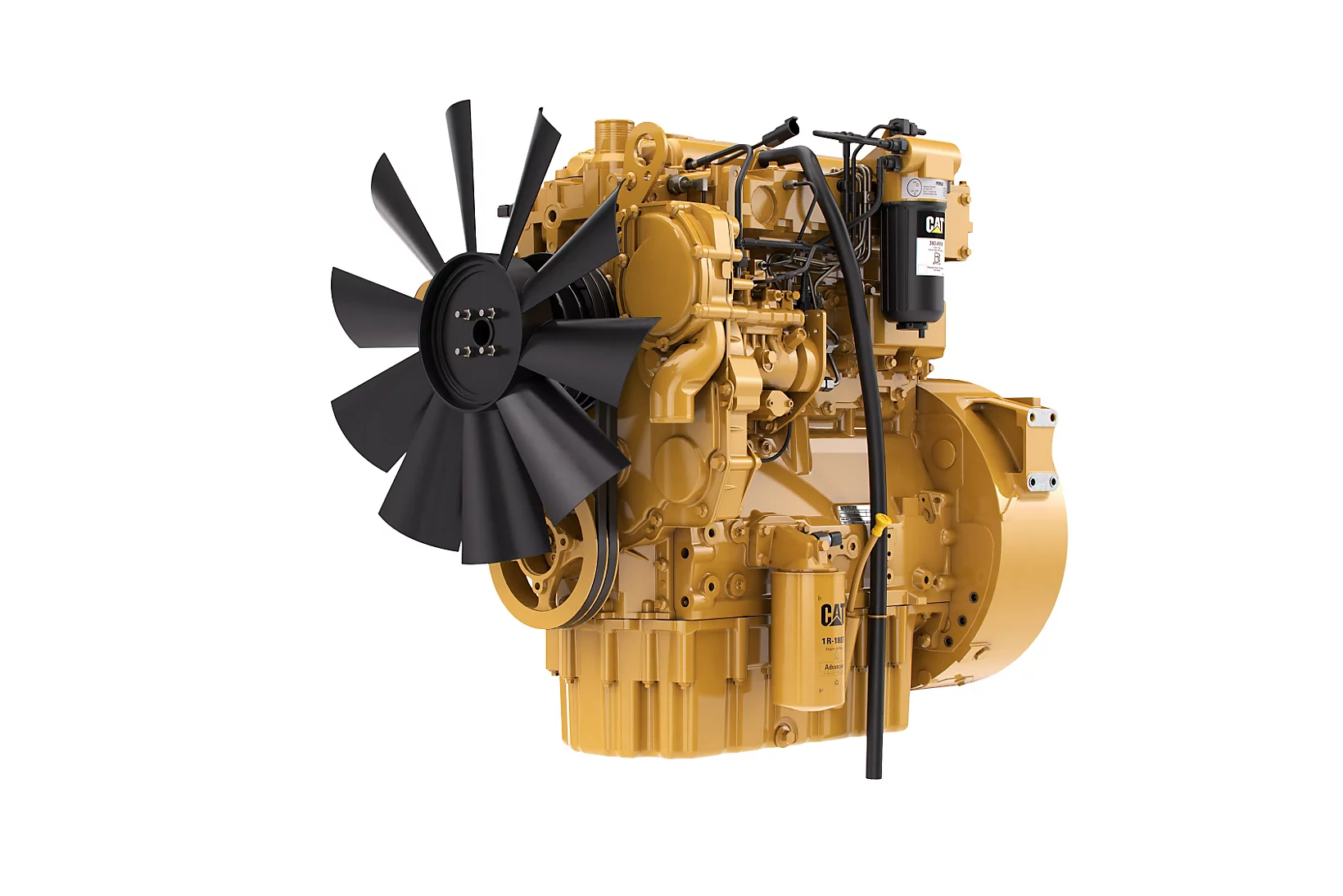
A 2-stroke diesel and a 4-stroke diesel have the same basic job: converting the chemical energy in diesel fuel into mechanical power.
The difference is how each engine completes the combustion cycle.
That distinction affects airflow, combustion frequency, engine architecture and the applications each design suits. It also helps explain why someone working around an older Detroit Diesel may have a very different view of 2-stroke technology from someone maintaining a modern Cummins X15 or Detroit DD15.
For most people researching a heavy-duty diesel engine for a modern truck, 4-stroke technology is the design they are far more likely to encounter. Older and specialised applications tell a broader story.
At AJK Engines, we work across heavy-duty diesel engines, engine components and exchange engine packages, so accurately identifying the engine and its application is an important first step before discussing parts, repairs or replacement options.
Here is how the two engine cycles differ and what those differences mean in practice.
2-Stroke vs 4-Stroke Diesel: How the Cycles Differ
The number in the name refers to the number of piston strokes required to complete an operating cycle.
A stroke is one movement of the piston from one end of the cylinder to the other.
In a 2-stroke diesel, a complete cycle occurs across two piston movements. In a 4-stroke diesel, it takes four.
That changes how often a power event can occur and how the engine handles incoming air and outgoing exhaust gases.
How a 2-Stroke Diesel Completes Its Cycle
A 2-stroke diesel completes its operating cycle during one crankshaft revolution.
During that cycle, the engine must handle compression, combustion, exhaust-gas removal and fresh-air charging within a much tighter sequence than a 4-stroke design.
A key concept is scavenging.
Fresh air needs to enter the cylinder while combustion gases are being cleared out. Many 2-stroke diesel designs therefore rely on carefully controlled ports and forced airflow to make that gas exchange happen effectively.
This is one reason a 2-stroke diesel should not simply be treated as the diesel equivalent of a small petrol 2-stroke engine.
Compression ignition still defines the diesel combustion process. Air is compressed until its temperature rises sufficiently for injected diesel fuel to ignite. There is no conventional spark-ignition process.
A 2-stroke diesel can also produce a power event on every crankshaft revolution. That gives the design a theoretical advantage in power-event frequency.
But more combustion events do not automatically mean twice the usable power.
How a 4-Stroke Diesel Works
A 4-stroke diesel completes its operating cycle over two crankshaft revolutions.
The process is usually explained through four distinct strokes:
- Intake: the piston moves down and fresh air enters the cylinder.
- Compression: the piston moves upward and compresses the air.
- Power: fuel is injected into the hot compressed air, combustion occurs and the expanding gases drive the piston downward.
- Exhaust: the piston rises again and pushes exhaust gases out of the cylinder.
This separates the intake and exhaust stages more clearly across the operating cycle.
Modern heavy-duty truck engines predominantly use 4-stroke architecture, making it the standard configuration most operators and technicians will encounter in current on-road trucking.
Does a 2-Stroke Diesel Make More Power?
A 2-stroke can produce a power event every crankshaft revolution. A 4-stroke generally produces one every two revolutions.
It can therefore be tempting to assume that a 2-stroke must produce twice the power.
Engine performance is more complicated than that.
Actual output depends on displacement, airflow, boost pressure, fuelling, combustion efficiency, engine speed, thermal limits, component strength and other design choices.
Power-stroke frequency is only one variable.
| Factor | 2-Stroke Diesel | 4-Stroke Diesel |
| Complete cycle | Two piston strokes | Four piston strokes |
| Crankshaft rotations per cycle | One | Two |
| Potential power event | Every revolution | Every second revolution |
| Gas exchange | Strong dependence on effective scavenging | Dedicated intake and exhaust strokes |
| Modern highway-truck use | Limited | Dominant |
| Common context today | Legacy and specialised applications | Modern road transport and many industrial applications |
A well-designed 4-stroke diesel can deliver high torque and power while meeting the fuel-use, operating and emissions requirements expected from a modern commercial engine.
A 2-stroke design can still make sense where its characteristics suit the application.
The important point is that stroke count alone does not determine which engine performs better in real-world use.
Why 2-Stroke Diesels Became Important in Heavy-Duty Applications
There is a reason 2-stroke diesels developed a serious reputation in heavy-duty work.
The architecture allowed designers to achieve frequent power events and strong power density, characteristics that proved useful in demanding applications.
Historically, 2-stroke diesels appeared in heavy vehicles, locomotives, marine propulsion and industrial equipment.
Some older Detroit Diesel engine families became particularly well known for the 2-stroke cycle. That is why experienced diesel mechanics and long-time operators may still have extensive practical knowledge of this design.
For someone entering the diesel industry today, that history can create confusion.
An apprentice may spend most of their time around modern electronically controlled 4-stroke engines, then hear an experienced mechanic discussing an older 2-stroke Detroit as though the technology is perfectly ordinary.
In its historical context, it was. The commercial diesel market has since shifted heavily towards 4-stroke designs.
High Power Density Was a Genuine Advantage
Producing a power event every revolution creates opportunities for strong power output relative to engine size and weight.
For applications where compact output mattered, that characteristic could be attractive.
It also introduced engineering demands.
The cylinder still needs fresh air. Exhaust gases still need to leave. Temperatures must be controlled. Fuel must be delivered at the correct moment. Lubrication and component durability still determine whether an engine can survive serious workloads.
A 2-stroke cycle does not remove those requirements. It changes how engineers manage them.
Scavenging is a good example.
Because there is less separation between exhaust-gas removal and incoming-air charging, effective cylinder clearing becomes central to how the engine breathes. Forced induction and airflow management therefore play an important role in many 2-stroke diesel designs.
Four-Stroke Diesel Became the Standard for Modern Heavy-Duty Trucks
Modern commercial road transport is dominated by 4-stroke diesel engines.
Current heavy-duty engine families include platforms such as Cummins ISX and X15 engines, Detroit DD-series engines, Caterpillar C15 applications, Mercedes-Benz heavy-duty engines and PACCAR MX-series platforms.
The shift towards 4-stroke technology cannot be explained by a single advantage.
Modern engine development has had to balance fuel consumption, torque, service life, emissions requirements, electronic management, turbocharging, aftertreatment and compatibility with increasingly sophisticated truck systems.
Fuel Delivery Has Become Far More Precise
Modern diesel engines use increasingly sophisticated fuel-management systems.
The basic goal remains familiar: deliver the appropriate amount of fuel at the appropriate time for the operating conditions.
What has changed is the level of control.
Electronic engine management allows fuel delivery to respond to load, speed, temperature and other inputs. Modern injection technology can exercise much finer control over combustion than older mechanically governed systems.
For an operator, this affects more than power.
Combustion quality influences fuel use, emissions, driveability, component loading and engine behaviour across different operating conditions.
Turbocharging Is Part of the Whole Engine Package
Turbocharging uses energy in the exhaust stream to increase the amount of air available for combustion.
More usable air can support more effective combustion and greater engine output when the entire system is designed and calibrated accordingly.
Modern heavy-duty diesels integrate turbocharging closely with fuel delivery, cooling, intake systems, exhaust systems and electronic controls.
That is why comparing engines purely by stroke cycle has limited value.
Two engines can both use 4-stroke diesel architecture and still behave very differently because their displacement, turbocharging, fuel systems, calibration and intended duty cycles differ.
Emissions Requirements Changed Diesel Development
Modern road-going diesel engines must also operate within emissions requirements.
The scale of that change is reflected in Australia’s current heavy-vehicle standards. According to the Australian Government, the Euro VI-equivalent ADR 80/04 reduces permitted nitrogen oxide emissions by 77–80% and particulate-matter limits by 50–66% compared with Euro V requirements.
Depending on the engine and emissions generation, a modern diesel may incorporate exhaust gas recirculation, diesel particulate filtration, selective catalytic reduction and electronic monitoring.
For a truck owner, those systems become part of the engine-selection and maintenance picture.
The combustion cycle still matters, but a modern diesel engine is better understood as an integrated system rather than simply a block, pistons and a stroke count.
What Truck Operators Should Compare Today
Someone researching diesel engine types can easily get pulled into technical debates that have little connection to the decision in front of them.
For a truck owner, stroke cycle is only one part of the engine question.
The more useful considerations include:
- What engine family is already fitted?
- What work does the vehicle perform?
- What electronic and emissions systems need to remain compatible?
- What parts and workshop support are available?
- What level of downtime can the operation tolerate?
- What installation requirements apply?
These factors can matter far more than deciding whether one combustion-cycle architecture is mechanically superior in the abstract.
Consider two 4-stroke engines.
Both may have six cylinders. Both may be turbocharged. Both may be designed for heavy commercial work.
That does not make them interchangeable.
Mounting, electronics, cooling, fuel systems, emissions equipment, torque characteristics, transmission compatibility and vehicle configuration can all differ.
The label 4-stroke diesel tells you how the engine completes its combustion cycle. It does not tell you enough to order a replacement engine.
Choosing a Diesel Engine Today Is About the Application
For most modern truck operators, there is no genuine 2-stroke versus 4-stroke purchasing contest.
The vehicle platform, engine generation and intended application will usually narrow the options long before stroke cycle becomes a deciding factor.
Highway Trucks and Commercial Fleets
Modern long-haul and commercial road trucks predominantly use 4-stroke diesel engines.
These engines have been developed around the requirements of road freight, including sustained loads, fuel efficiency, emissions compliance, service intervals and integration with modern truck electronics.
A fleet operator considering an engine replacement is therefore more likely to compare specific engine families, package conditions, rebuild specifications and support arrangements than combustion cycles.
The practical question may be whether a particular Cummins, Detroit, Caterpillar, Mercedes-Benz or PACCAR engine package is appropriate for the existing truck and duty cycle.
That is more useful than asking whether a 2-stroke or 4-stroke is better in isolation.
Older Trucks, Machinery and Legacy Engines
Older equipment needs a different approach.
A legacy engine may use architecture that is no longer common in new road vehicles. That does not automatically mean the engine should be converted to something newer.
Original configuration, parts availability, intended use, economics and the extent of any required vehicle modifications all need to be considered.
This is where accurate identification becomes critical.
Ordering components based on a vague description such as “an old Detroit” creates unnecessary room for error. Engine families, generations and specifications matter.
Start with the engine identification before making repair or replacement decisions.
Before Comparing Engines, Work Out Exactly What You Have
If you are researching an engine because a truck has developed a serious fault or needs replacement, gather the identifying information before looking at solutions.
Useful details include:
- engine manufacturer
- engine model or family
- engine identification or serial information
- truck make and model
- vehicle application
- current engine configuration
- reason for repair or replacement
- any relevant emissions or electronic configuration.
AJK’s enquiry process asks for the engine make and model as well as the truck make and model because those details help establish what equipment is involved before discussing the required service.
Two engines carrying the same manufacturer badge may belong to different generations, use different components or require different installation considerations.
The more precise the identification, the more useful the repair or replacement discussion becomes.
Which Makes More Sense Today?
For a modern heavy-duty truck, 4-stroke diesel is the practical answer in the overwhelming majority of cases.
Current commercial engine platforms have developed around 4-stroke architecture, supported by modern fuel systems, turbocharging, electronic controls and emissions technology.
That does not make the 2-stroke diesel a failed or irrelevant design.
It solved real engineering problems and powered demanding equipment for decades. It remains relevant to certain legacy engines, specialist machinery and historical heavy-duty diesel applications.
The right choice depends on what the engine is expected to do.
A modern highway truck has different requirements from a legacy industrial engine. A marine installation can impose different demands from a commercial road vehicle. An engine being restored presents a different decision from one being selected for a current fleet.
Understanding the stroke cycle gives you useful technical context. The application determines what is appropriate.
Think You Know the Difference? These Are the Questions That Usually Come Next
Is a 2-stroke diesel the same as a 2-stroke petrol engine?
No. The engines share the concept of completing an operating cycle in two piston strokes, but the combustion process is different.
A diesel engine uses compression ignition, with fuel injected into highly compressed, heated air, while conventional petrol engines generally rely on spark ignition.
The airflow, fuel-delivery and lubrication arrangements can also differ substantially between the two engine types.
Does a 2-stroke diesel make twice the power of a 4-stroke?
No.
A 2-stroke diesel can have a power event every crankshaft revolution, compared with every second revolution in a 4-stroke cycle, but power output depends on far more than combustion-event frequency.
Displacement, airflow, boost, fuel delivery, engine speed, combustion efficiency, mechanical limits and thermal management all influence the amount of useful power an engine can produce.
Are 2-stroke diesel engines still used?
Yes, although their relevance depends heavily on the application.
They may still be encountered in legacy equipment and specialised industrial or marine settings. Modern road-going heavy trucks, by comparison, predominantly use 4-stroke diesel technology.
Why are modern truck diesels generally 4-stroke?
Modern truck engines have developed around a combination of fuel economy, emissions requirements, durability, electronic control, turbocharging and integration with modern vehicle systems.
Four-stroke architecture has become the dominant basis for the diesel platforms used in today’s heavy-truck market.
Is a 4-stroke diesel always more fuel efficient?
Stroke cycle alone cannot tell you the real-world fuel consumption of a particular engine.
Engine generation, displacement, load, vehicle configuration, fuel system, turbocharging, calibration, maintenance condition and driving environment all affect fuel use.
Comparing the actual engine specifications and intended application gives a more useful answer than relying on stroke count alone.
How can I tell whether my diesel engine is 2-stroke or 4-stroke?
Start with the engine’s identification information.
Find the manufacturer, engine model and serial or identification details, then check the correct technical documentation or speak with a diesel specialist familiar with that platform.
Trying to identify an engine purely from its sound or appearance is less reliable than working from its actual model information.
Does stroke cycle matter when buying a replacement truck engine?
Yes, but it is only the beginning of the compatibility question.
A replacement also needs to suit the engine family, truck platform, electronic configuration, emissions generation and installation requirements.
That is why accurate make, model and engine identification should come before ordering a replacement unit or major components.
Know the Engine Before You Spend Money on the Solution
Understanding the difference between a 2-stroke and 4-stroke diesel gives you a stronger foundation for understanding diesel technology.
For modern heavy-duty trucks, 4-stroke engines dominate the market. For older and specialised equipment, 2-stroke diesels remain part of the picture.
If you are researching the topic because of an engine fault or replacement decision, the next step is to get specific.
Identify the engine, understand the application and confirm the vehicle configuration before comparing the options that genuinely fit.
At AJK Engines, we supply heavy-duty diesel engines, engine parts and exchange engine packages across major commercial platforms. If you are dealing with an existing truck, engine fault or replacement decision, you can provide the engine make and model along with the truck details so the discussion starts with the equipment you actually have.
That is a more reliable starting point than choosing an engine based on the words “2-stroke” or “4-stroke” alone.