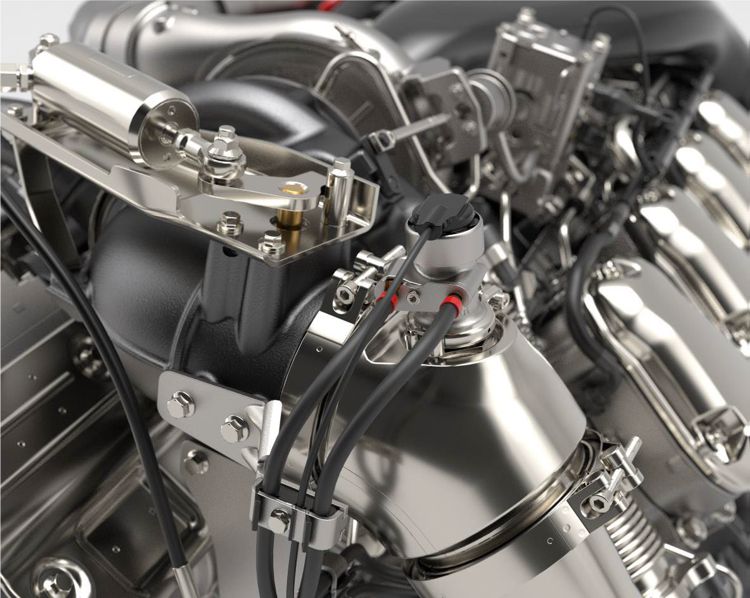
Let’s face it. Talk of “electrification” dominates the headlines, but out in the real world of logistics, mining, construction, and emergency power, diesel engines remain essential. This article unpacks where diesel still dominates, where it’s evolving, and how industry leaders should plan for its role in the next decade.
Where Diesel Still Reigns Supreme
The Most Common Diesel Engine Applications Across Industry Sectors
While new technologies get the headlines, diesel engines are what keep the industrial world running behind the scenes. Here’s where diesel is still king:
- Heavy Freight and Logistics: Long-haul trucks, especially those moving across vast rural Australia, still rely on high-torque diesel engines. Electric alternatives can’t yet match the uptime or range. Even hybrid-electric heavy vehicles struggle with the battery weight-to-range ratio when carrying full loads over long distances. Diesel engines deliver uninterrupted performance, making them indispensable for Australia’s transport backbone.
- Mining and Construction Equipment: Bulldozers, excavators, and haulers operate in dust, heat, and remote terrain. Diesel engines excel in these environments because of their superior torque and resilience. The mining sector, particularly in Western Australia and Queensland, depends on diesel to power not just vehicles, but generators, compressors, and auxiliary machinery.
- Marine Applications: From commercial trawlers and ferries to offshore support vessels, diesel remains the propulsion system of choice. Reliability, fuel efficiency over long distances, and the ease of onboard refuelling make diesel the trusted choice for operators who can’t afford mechanical failure at sea.
- Agriculture and Farming: Agricultural engines power irrigation, tilling, and harvesting systems. Diesel’s ruggedness and efficiency make it ideal for farms that span hundreds of acres and rely on long working hours in harsh climates. With fewer refuelling stops and simpler maintenance routines, diesel offers cost savings and operational flexibility.
- Backup Generators: Critical infrastructure such as hospitals, emergency services, airports, and data centres rely on diesel for uninterruptible power. In areas prone to power outages or where grid reliability is poor, diesel generators provide immediate and dependable energy. Even construction sites use them to power lighting, tools, and systems before permanent electricity is connected.
In every one of these cases, diesel is not only a practical choice—it’s a proven standard. Its dominance is a result of decades of engineering evolution tailored to tough, performance-driven environments.
What’s Changing in Diesel Applications
New Uses in Hybrid Systems, Modular Power, and Remote Operations
Diesel isn’t standing still. Its adaptability is one reason it continues to be relevant in an era of tightening emissions regulations and green energy targets.
- Hybrid Diesel-Electric Powertrains: Especially in public transport, we’re seeing a rise in diesel-electric hybrid buses. These setups allow for fuel savings in urban traffic while maintaining the range for longer suburban routes. Some rail networks in regional Australia also use diesel-hybrid locomotives to bridge gaps in electrified tracks.
- Microgrid and Modular Power Systems: Construction projects, mining operations, and remote field stations increasingly use microgrids powered by diesel and solar hybrids. These systems provide continuous power and offer load balancing capabilities. Modular diesel generators are often moved from site to site, offering flexibility that fixed infrastructure cannot.
Across Australia, diesel use remains substantial, with combustion accounting for around 17% of the nation’s total carbon emissions, according to the Australian Academy of Technological Sciences and Engineering (ATSE). This highlights both diesel’s vast industrial footprint and the need for cleaner, more efficient technologies within these sectors
- Emission-Optimised Diesel Technology: Technologies like SCR (Selective Catalytic Reduction), DPF (Diesel Particulate Filters), and cooled EGR (Exhaust Gas Recirculation) have drastically reduced NOx and particulate matter. This makes newer diesel engines cleaner than ever and compliant with Tier 4 or Euro 6 standards.
- City-Compatible Diesel Systems: In urban construction, low-emission diesel engines are now permitted in projects where conventional diesel engines would have been banned. These engines feature noise-dampening and cleaner combustion technologies, reducing their environmental footprint and community impact.
- Mobile and Temporary Infrastructure: Disaster response units, field hospitals, and mobile communications towers still turn to diesel-powered units due to their reliability and ease of deployment. These are mission-critical operations where failure is not an option.
This shift shows that diesel’s future isn’t a matter of extinction—it’s evolution. Its integration into low-carbon systems and hybrid configurations will define its next era of relevance.
Why Diesel Still Wins in the Real World
Torque, Efficiency, and Field-Proven Performance
Let’s cut through the noise. When it comes to real-world work—on farms, in the mines, or out on the highway—diesel still has the upper hand.
- Torque at Idle: Diesel engines deliver high torque from low RPMs. That’s a critical advantage for heavy lifting, towing, and idling tasks common in construction and agriculture.
- Energy Storage and Refuelling: Diesel fuel is energy dense and easily stored. You don’t need a grid. You don’t need charging stations. You just need a jerry can or tanker. That’s why diesel remains the only viable option in many remote or mobile applications.
- Extended Run Times: A diesel generator can run continuously for days with refuelling, making it the go-to for remote camps and isolated outposts.
- Proven Resilience: Diesel engines handle temperature extremes, dust, and rough handling far better than sensitive electric systems. They’re rugged, repairable, and built to last.
- Lower Cost in Demanding Use: For many applications, the total cost of ownership of a diesel engine, especially a reconditioned one, beats that of high-voltage electric alternatives that require specialist support and high-cost battery replacements.
The key message? If you need dependable performance in high-stress conditions, diesel remains unmatched.
Planning for Diesel in the Next Decade
How to Position Your Business for Smart, Sustainable Power
Here’s how industry planners can approach diesel with confidence and intelligence in a changing energy landscape.
- Embrace a Tiered Strategy: Not every asset in your fleet needs a new diesel engine. Consider reconditioned or remanufactured options for lower-mileage or backup vehicles. These options can save tens of thousands without compromising on reliability.
- Get Hybrid-Ready: Work with suppliers who understand both diesel and battery integration. AJK Engines, for example, provides engine platforms that can support dual-mode operation and be integrated into future hybrid solutions.
- Understand the Regulatory Landscape: Keep an eye on government rebates for cleaner diesel technologies. In some regions, tax offsets and incentives are available for fleets upgrading to Euro 6-compliant engines.
- Budget for Long-Term Efficiency: Diesel engines built or reconditioned to high standards last longer and use fuel more efficiently. That’s why many fleet operators are switching from short-term patch jobs to full engine replacements with warranty-backed solutions.
- Train for Uptime: Many businesses lose money not from engine failure, but from delays in diagnosing and fixing issues. Use partners that offer expert advice, easy-to-source parts, and fast turnaround times.
If you’re serious about operational continuity, planning around diesel should still be a major part of your strategy.
What People Often Ask Before Committing to Diesel
Trusted Diesel Insights for Industry Planners and Professionals
Is diesel still a smart investment for 2025 and beyond?
Yes. Especially in logistics, mining, and agriculture. Diesel remains the most cost-effective and scalable solution for many high-demand sectors.
What’s the difference between remanufactured and new diesel engines?
Remanufactured engines are disassembled, cleaned, machined, and rebuilt with new components. They offer performance comparable to new units at a significantly lower price point. At AJK Engines, they come with a 12-month unlimited-kilometre warranty.
Can I reduce emissions and still use diesel?
Definitely. By selecting Tier 4 or Euro 6 compliant engines and using low-sulphur fuel, your operation can meet modern emission standards without transitioning away from diesel.
Is a drive-in, drive-out service worth it?
Absolutely. It reduces your project timeline, minimises error, and gets your vehicle back on the road faster. At AJK Engines, everything from removal to fitting is handled under one roof by diesel specialists.
Do you supply diesel engines for applications beyond trucks?
Yes. AJK Engines supports marine, generator, and industrial applications. Whether you’re powering a mobile crane or an irrigation system, there’s likely a diesel solution that fits.
Power What Matters With Diesel You Can Trust
At AJK Engines, we don’t just sell engines. We solve problems. We help planners, fleet managers, and industry professionals like you eliminate downtime and keep your assets working at full capacity.
Whether you’re replacing a worn-out Detroit Diesel DD15, upgrading to a remanufactured Cummins X15, or building a hybrid-ready system, our team brings unmatched technical experience and genuine care.
With over 700 products in stock, a complete drive-in, drive-out service, and every engine backed by a 12-month unlimited-kilometre warranty, we’re ready to deliver diesel solutions that work in the real world.
Call 07 5529 2289 or visit ajkengines.com.au/contact-us to talk with the specialists.