
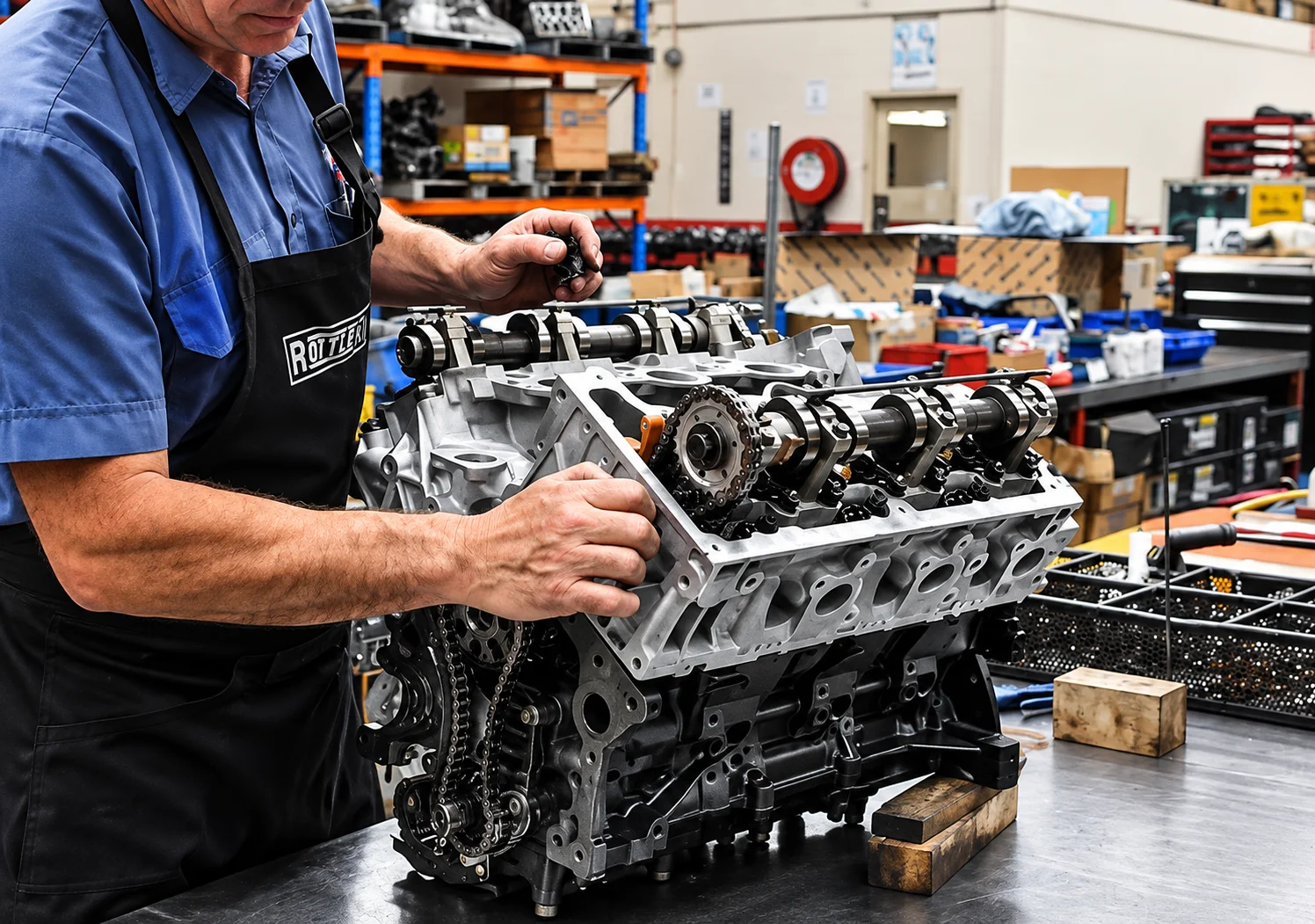
If you are comparing reconditioned engines in Australia, a fresh coat of paint tells you very little about the quality or scope of the engine build.
The information that deserves your attention sits deeper inside the engine. You need to know how it was stripped, inspected and measured, which components were machined, what was replaced and how the finished engine was assembled.
For an owner-driver, fleet manager or transport operator, those details have a direct commercial consequence. The engine has to go back into a working truck and earn its keep.
At AJK Engines, we supply new, remanufactured and reconditioned heavy-duty diesel engines for commercial operators. Most engine enquiries come with a practical problem attached: a truck is off the road, an engine has failed or an operator needs to decide which replacement route makes sense.
This guide explains how to assess a reconditioned engine by looking at the work behind the finished product.
| Stage | What to establish before buying |
| Teardown and inspection | How was the incoming engine core assessed? |
| Block and crankshaft assessment | How were the major reusable components cleaned, inspected and crack tested? |
| Measurement and machining | What required machining, and what inspection or measurement led to that decision? |
| Component replacement | Which parts are new, reused or machined as part of the package? |
| Assembly | What platform specifications and procedures apply to the build? |
| Final checks | What verification applies to the completed engine before supply? |
Before You Buy a Reconditioned Engine, Find Out What the Work Included
The term reconditioned engine gives you a broad description. It does not give you a complete build specification.
A heavy-duty diesel engine may require extensive inspection, measurement, machining and component replacement before it is ready for reassembly. The scope depends on the platform, condition of the incoming core and specification of the finished engine.
That makes the build process more useful than the label.
Find out whether the engine was completely stripped, how the block and crankshaft were assessed, which parts were measured, machined or replaced, and what checks or verification apply to the finished build.
Specific answers make engine packages easier to compare.
What Is a Reconditioned Diesel Engine?
A reconditioned diesel engine is an engine that has been dismantled so its components can be inspected and prepared for further service.
The process can include cleaning, crack testing, dimensional checks, machining, replacement of worn components and controlled reassembly. The work required varies because every incoming engine has its own wear pattern, operating history and condition.
A proper reconditioning process is therefore driven by inspection findings.
One component may remain suitable after cleaning and measurement. Another may require machining. Another may need replacement.
That is the level of detail worth examining before you buy.
Reconditioned Truck Engines Have to Suit Commercial Work
Commercial truck engines operate under demanding conditions.
Long operating hours, sustained loads, heat cycles and demanding duty patterns can expose weaknesses quickly. Downtime also carries a business cost, particularly for operators relying on a single vehicle or a tightly scheduled fleet.
The scale of Australia’s road freight task puts that commercial role into perspective. Bureau of Infrastructure and Transport Research Economics data shows that approximately 253 billion tonne-kilometres of domestic freight were moved by road in Australia during 2024–25.
A purchasing decision therefore needs to cover more than the initial price.
Look at the engine specification, the condition of the reusable components, what has been replaced and whether the package suits the truck’s intended workload.
Good Reconditioning Starts With Finding Problems Before New Parts Go In
Teardown gives the engine builder access to information that cannot be gathered from the outside.
Once the engine is dismantled, individual components can be cleaned, measured and inspected. The condition of the block, crankshaft and associated assemblies then guides the work that follows.
Our reconditioning process begins with teardown and inspection of the incoming engine core.
Those findings help determine what can be reused, what needs machining and what needs replacing.
Engine Teardown, Inspection and Core Assessment
Every core arrives with a history.
Some engines come in after a known failure. Others show accumulated wear after a long service life. Previous repairs may also affect the condition of individual components.
A complete inspection helps reveal that history.
The builder can examine each major component, identify defects and determine which parts can continue through the build.
For buyers comparing reconditioned diesel engines, the useful question is straightforward: how was the incoming core assessed before rebuilding began?
The Block and Crankshaft Can Change the Direction of the Build
The block and crankshaft form part of the engine’s structural foundation. Their condition can affect the work required throughout the rest of the build.
Our reconditioning process includes chemical cleaning and crack testing of engine blocks and crankshafts. Cleaning exposes surfaces for closer inspection, while crack testing can identify defects that may not be apparent during a basic visual check.
Measurements and inspection findings then guide the next stage of work.
Crack Testing and Cleaning Heavy-Duty Diesel Components
Cleaning serves a technical purpose.
Oil, carbon, corrosion and accumulated deposits can conceal surfaces that need to be examined. Proper preparation gives the builder a clearer view of the component before further decisions are made.
Crack testing adds another level of assessment for major components that will remain part of the finished engine.
For a buyer, the important point is understanding how those reusable components were assessed before they went back into the engine.
Ask What Was Checked as Well as What Was Replaced
Replacement parts often receive most of the attention during an engine sale, but the reused components deserve scrutiny as well.
A build may contain new bearings, fasteners and other replacement items while still relying on the original block, crankshaft and other major components. Those reusable parts need to be assessed before they return to service.
Find out how they were cleaned, inspected and measured, whether machining was required and what determined whether each component remained suitable for the build.
That information tells you more about the engine than its external appearance.
Precision Machining Should Follow Inspection and Measurement
Machining has a specific job.
Inspection and measurement may show that a component requires corrective work before it can return to service. The required machining can then be carried out to restore the relevant surfaces or dimensions according to the engine specification.
Our reconditioning process includes precision machining where component condition calls for it.
How Machining Fits Into a Reconditioned Engine Build
The sequence is important.
First, the component is removed and cleaned. Its condition is then inspected and measured. Those findings determine whether corrective machining is required.
Different cores arrive with different levels of wear. One component may remain within specification, while another may need corrective work before it can be used again.
When comparing engines, establish whether machining decisions were based on inspection and measurement and how the finished component was assessed before assembly.
Component Decisions Shape the Finished Reconditioned Engine
Every engine contains parts that wear through normal operation.
After teardown, the builder has to determine which components remain serviceable, which require machining and which need replacement. Our reconditioning process includes replacement of specified wear items and other components according to the engine package being built.
This is one reason reconditioned engines should be compared by specification rather than by label alone.
Which Engine Components May Need Replacement?
There is no universal replacement list for every heavy-duty diesel engine.
Requirements depend on the engine platform, component condition, inspection results and the specification of the package being supplied.
Bearings, fasteners and other wear-related items may form part of the replacement scope. Larger assemblies can vary between engine packages and platforms.
The actual package inclusions provide a more useful basis for comparing different reconditioned truck engines.
The Parts List Gives You a Clearer Picture of the Build
The word “reconditioned” does not tell you which components are new, reused or machined.
A written package specification can.
AJK Engines supplies different engine packages across several heavy-duty diesel platforms, and package contents can vary. Review the specification for the engine you are considering instead of assuming every package contains the same components.
That also makes price comparisons more meaningful.
Correct Assembly Brings the Engine Back Together
Inspection, machining and component replacement prepare the parts. Assembly turns those parts into a functioning engine.
Clearances, fastener procedures, component installation and timing all have to suit the engine platform being built. Errors during assembly can affect operation even if the individual components were prepared correctly.
Our reconditioning process includes professional assembly and timing according to the relevant manufacturer specifications.
Heavy-Duty Engine Assembly Has to Match the Platform
Heavy-duty diesel engines have platform-specific requirements.
A Cummins, Caterpillar, Detroit Diesel, Mercedes-Benz or PACCAR engine has its own components, procedures and specifications. General diesel knowledge alone does not replace familiarity with the engine being assembled.
This is also why we ask for detailed engine and truck information when discussing replacement options.
The engine identification helps establish what we are dealing with before discussing the available path forward.
Confirm What Is Checked Before the Engine Is Supplied
Assembly is not the last question to ask about a reconditioned engine.
Before buying, confirm what checks or verification apply to the completed engine. These procedures can vary between engine platforms, packages and workshop processes, so the answer should relate to the specific engine being considered.
Avoid relying on broad descriptions such as “tested” or “checked” without understanding what they mean for that engine.
Find out what verification forms part of the build and what information is available about the completed engine before supply.
Reconditioned, Remanufactured and Exchange Engines Describe Different Parts of the Decision
Engine terminology can become confusing because several terms may appear in the same enquiry.
“Reconditioned” describes the work performed on an engine.
“Exchange” describes a supply arrangement.
Under an exchange arrangement, a replacement engine is supplied and the customer’s existing engine is returned as the exchange core. Additional core charges can apply if a suitable exchange core is not supplied.
At AJK Engines, we offer new, remanufactured and reconditioned engines across a range of heavy-duty applications, including engines supplied on an exchange basis.
Our guide to exchange engines vs rebuilds explains that distinction in more detail.
A Reconditioned Engine Can Also Be an Exchange Engine
These terms answer different questions.
Reconditioning concerns the work carried out on the engine.
Exchange concerns how the engine is supplied and what happens to the customer’s existing core.
Understanding both sides of the transaction makes it easier to compare quotes and identify potential core-related costs before committing to a purchase.
The Right Engine Has to Suit the Truck and the Work Ahead
An engine build can be well executed and still be unsuitable for a particular truck or application.
Engine platform, truck configuration, operating conditions, expected workload and the condition of the existing engine can all influence the most practical solution.
The vehicle’s future also deserves consideration.
An operator planning to retain a truck for years may approach the decision differently from a fleet preparing to replace the vehicle sooner. The package should make commercial sense for the truck and its expected service.
Choosing Reconditioned Truck Engines for Commercial Use
Start with accurate vehicle and engine information.
We recommend having the engine make and model, truck make and model, current engine condition and normal operating application available before discussing replacement options.
Details about the failure or symptoms can also help frame the enquiry.
Accurate information reduces assumptions and gives us a better basis for discussing suitable engine packages.
You can review our current engine range to see the heavy-duty platforms and packages we supply.
See the Engine Specification Before You Judge the Price
Price is easy to compare because it appears as one figure.
The specification takes more work to read, but it explains what that figure buys.
Two engine packages can differ in component inclusions, scope of reconditioning, exchange conditions and installation requirements. A lower advertised price may therefore represent a different package rather than a comparable engine offered for less.
Check what is included in the engine, the exchange core conditions, whether installation is included or quoted separately, and the warranty terms that apply to the specific supply arrangement.
Once those details are clear, the quoted figure has context.
We Start With the Truck, Engine and Job It Has to Do
At AJK Engines, we supply new, remanufactured and reconditioned heavy-duty diesel engines for commercial operators.
Our first job is to understand the truck in front of the enquiry.
We want to know which engine is fitted, the condition of the current unit, how the vehicle is used and what outcome the operator is trying to achieve. Those details give us a better basis for discussing available replacement, exchange or reconditioning options.
If you are comparing reconditioned engines in Australia, contact AJK Engines with your engine make and model, truck details and current engine condition.
Questions Worth Asking Before a Reconditioned Engine Goes Into Yourc Truck
How Long Should a Properly Reconditioned Truck Engine Last?
There is no responsible universal lifespan that applies to every engine.
Service life is affected by the engine platform, build specification, installation, operating load, maintenance and working conditions. Ask about the engine’s build scope and suitability for your application instead of relying on a blanket kilometre or hour figure.
Is a Reconditioned Engine the Same as a Rebuilt Engine?
Terminology can vary between suppliers.
The more reliable comparison is the actual work performed on the engine. Find out how it was stripped and inspected, what was machined, which parts were replaced and what specification was used during assembly.
What Parts Should Be Replaced During Engine Reconditioning?
The required parts depend on the engine and its condition.
Inspection findings, measurements and the package specification determine which components can remain in service and which require replacement. A written list of inclusions gives you a clearer answer than a generic description of the engine.
Should the Engine Block and Crankshaft Be Crack Tested?
Structural inspection can identify defects that may be difficult to detect visually. Our reconditioning process includes chemical cleaning and crack testing of engine blocks and crankshafts as part of component assessment.
Does Every Reconditioned Engine Need Machining?
No. Machining requirements should follow component inspection and measurement.
A component that remains within the required specification may call for a different course of action from one showing measurable wear or damage.
What Should I Ask Before Buying a Reconditioned Diesel Engine?
Check the build specification, inspection of reusable components, machining performed, replacement parts, package inclusions, exchange core conditions, applicable checks, installation requirements and warranty terms.
Those details help you compare offers based on the work and components supplied.
Can a Reconditioned Engine Be Used for Heavy Commercial Work?
Yes, provided the engine and build specification suit the application.
The engine’s condition, scope of reconditioning, component quality, installation, maintenance and operating environment all affect how suitable the package is for commercial service.
What Information Should I Give AJK Engines When I Enquire?
Send us the engine make and model, truck make and model, current engine condition and the type of work the truck performs.
Include any known fault or failure information as well. That gives us a clearer starting point for discussing the available options.
Know the Work Behind the Engine Before You Put It Back to Work
The value of a reconditioned engine sits in the work carried out during the build.
Teardown exposes the engine’s condition. Cleaning and inspection reveal defects and wear. Measurements guide machining decisions. Replacement choices determine which components return to service. Controlled assembly brings the engine back together according to the requirements of the platform.
Those steps give you something concrete to assess.
Before buying a reconditioned engine, find out what was done to it, what is included and how the package fits your truck.
You can browse our heavy-duty engine range or contact AJK Engines with your engine and truck details to discuss the available new, remanufactured, reconditioned and exchange engine options.