Diesel engines drive economies literally. From hauling freight across the continent to powering off-road machinery in the toughest conditions, understanding how diesel engine power works is more than academically essential. Whether you’re an engineering student, a workshop apprentice, or a fleet manager making a six-figure engine decision, there’s one technical topic that underpins it all: torque vs horsepower.
Most people think of power ratings as just numbers on a spec sheet. But the real-world consequences of those numbers? That’s where engines win or fail. In this article, we break down diesel engine power into its two key components, torque and horsepower, showing how they work, how they differ, and how they should guide your choices on the road or in the workshop.
Power Isn’t Just a Number: Why Diesel Ratings Matter
How torque and horsepower define real-world performance
Every engine spec you’ve ever read lists both horsepower (hp) and torque (Nm or lb-ft). These aren’t just technical formalities. They represent how an engine behaves and what it can do. Torque measures rotational force; horsepower measures how fast that force works.
In heavy-duty diesel applications, knowing the difference is vital. Why? Because two engines with the same horsepower can behave completely differently under load. One might be built for speed, the other for raw pulling power.
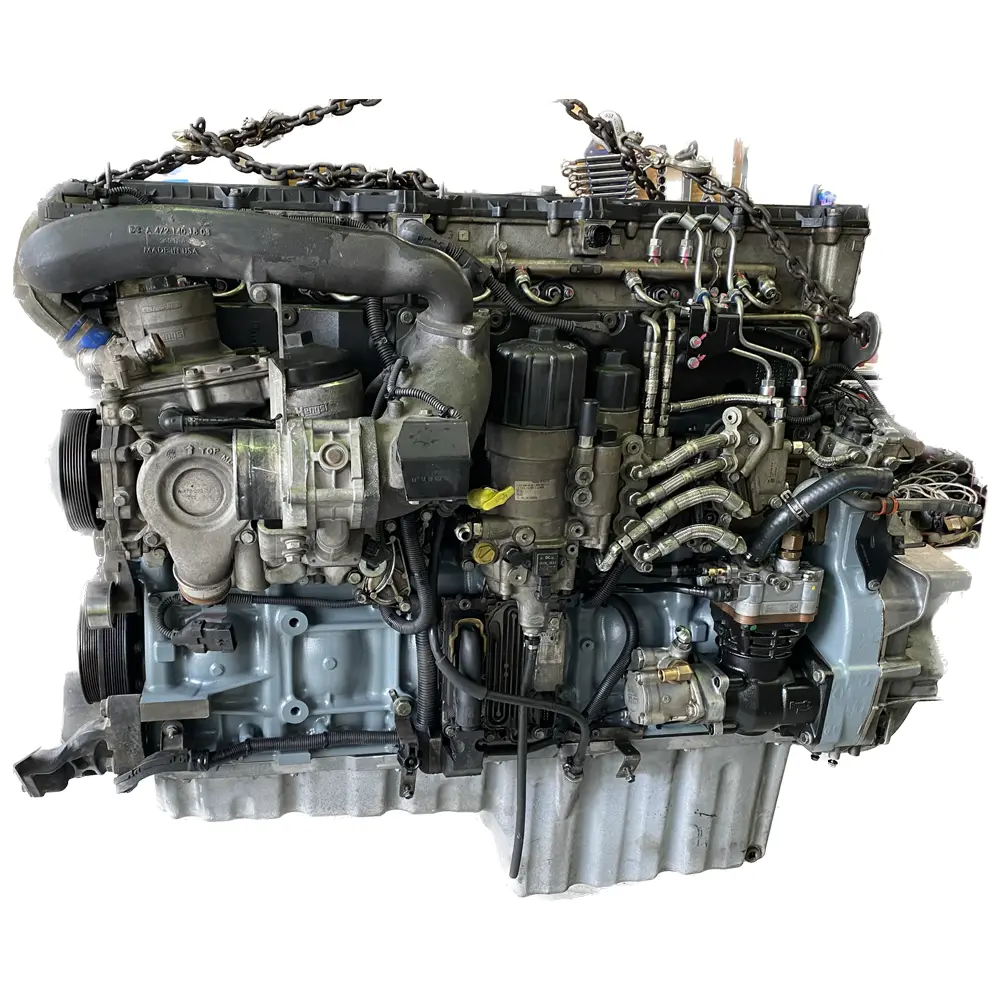
Diesel engines, like those in the Cummins X15, CAT C15, or Detroit DD15, are torque-first by design. They’re engineered to move tons of mass with minimal revolutions, especially at low RPMs. That’s why torque is often the true metric of performance in the commercial trucking world.
Torque vs Horsepower Explained Without the Jargon
A beginner-friendly breakdown of what each term actually means
Let’s simplify.
- Torque is the twisting force that gets the wheels turning.
- Horsepower is how fast that twisting force is applied.
Think of a wrench on a bolt. The harder you twist (torque), the more force you apply. But if you twist faster (power), the job gets done quicker. Torque is muscle; horsepower is muscle plus speed.
Mathematically:
Horsepower = (Torque × RPM) ÷ 5252
This equation explains a lot. High torque at low RPMs (a diesel specialty) equals big power without spinning fast. That’s perfect for pulling loads, climbing hills, or getting 40 tonnes moving from a dead stop.
Now imagine a sports car engine. It may have 600 hp but only 400 Nm of torque. Great for speed, not great for towing a trailer up the Toowoomba Range.
Why Torque Matters More in Diesel Engines
The science of pulling power and what it means for trucks
Torque is king in the diesel world. Here’s why.
Diesel engines burn more slowly than petrol engines, and they operate at lower RPMs. But they produce massive torque early, sometimes as low as 1,200 RPM. That low-end grunt is what gets 60-tonne BDoubles moving without burning out a clutch.
Let’s look at real figures:
- Cummins X15 E5: Up to 2,050 lb-ft of torque at just 1,0001,500 RPM
- Detroit DD16: Delivers 600 hp with peak torque at 1,100 RPM
This makes diesel engines ideal for stop-start operations, steep inclines, heavy haulage, and long-distance fuel efficiency. Road transport also contributes around 19% of Australia’s total greenhouse gas emissions, according to the National Greenhouse Gas Inventory, which means engines that achieve more torque at lower RPMs play an important role in improving efficiency. It’s also why most diesel engine packages, like AJK’s Baseline, Plus, and Premium tiers, are built around torque output as much as horsepower.
Want more load capacity without frying your transmission? You’re not shopping for horsepower. You’re shopping for torque.
Choose the Right Engine Power for the Job
Choosing an engine isn’t just about picking the most powerful option. It’s about matching the application to the powerband. Here’s how to break it down:
- LineHaul / LongDistance
Look for engines with high horsepower and high torque, like the Detroit DD15 Premium or Cummins X15 Premium. These maximise efficiency at cruising speeds while offering torque to overtake or climb. - Urban Delivery / StopStart Routes
You want peak torque at low RPMs. Consider a Baseline or Plus package where torque is prioritised over top-end speed. Look into CAT C15 (9NZ) for rugged, predictable torque. - Construction / Off-Road Applications
Engine packages like the Mercedes-Benz OM471 shine here. High torque with excellent throttle control and rugged durability. Lower horsepower is often acceptable because speed isn’t the priority; traction and torque are. - Industrial / Stationary Applications
If you’re powering cranes, generators, or pumps, torque and fuel efficiency are everything. Select engines with a flat torque curve and proven reliability under continuous load.
Here’s What You Might Be Thinking
Why do diesel trucks have more torque than petrol trucks?
Diesel engines burn fuel more slowly, have longer strokes, and higher compression ratios, generating more torque at lower RPMs.
Is more horsepower always better?
Not necessarily. More horsepower might mean more speed, but without enough torque, you’ll struggle under heavy loads. In diesel applications, torque is usually the performance driver.
What if two engines have similar horsepower but different torque ratings?
Pick the one with more torque if you’re hauling, towing, or climbing. The high-torque engine will feel more powerful at low speeds and under stress.
What’s the ideal torque range for long-haul trucking?
1,6502,050 lb-ft is typical for Class 8 trucks doing intercity or cross-country runs. AJK’s X15 E5 Premium package hits this range perfectly.
Does AJK Engines list torque specs on engine packages?
Yes. We include detailed performance specs for every engine on our website. Or call us, and we’ll walk you through the numbers based on your actual needs.
Power Isn’t Just Numbers. It’s a Business Decision
Whether you’re working under the hood or behind a desk making purchasing decisions, understanding diesel engine power ratings can save you time, money, and breakdowns.
AJK Engines isn’t just a seller. We’re a specialist service provider with in-stock engines, expert guidance, and drive-in, drive-out replacements on the Gold Coast. Every engine comes with a 12-month, unlimited-kilometer warranty, because we don’t just sell power, we stand behind it.
Ready to power smarter?
Call 07 5529 2289, visit ajkengines.com.au, or come by our Biggera Waters workshop today.
Let’s put torque to work.